Kannadasan at 100: the factory hand from Chettinad who made philosophy sing
Born Muthaiah in Sirukoodalpatti in 1927, Kannadasan left school after Class VIII, found his voice beside a poet-saint's memorial in Tiruvottiyur, and wrote film songs that still open the day in Tamil villages.
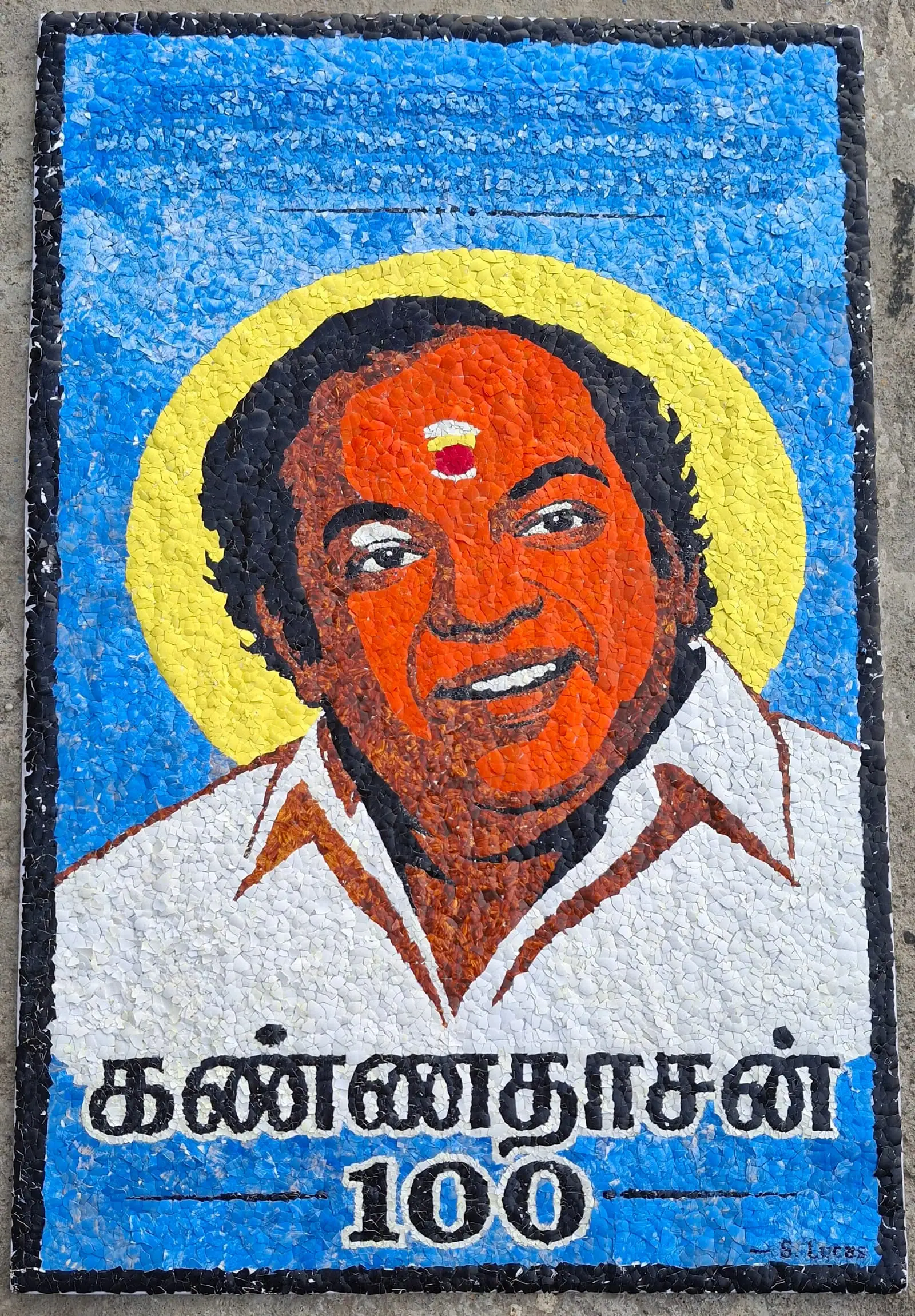
For a generation of Tamils, nostalgia has a sound, and very often it is a song written by Kannadasan. As Tamil Nadu marks the poet's birth centenary, his lines are being quoted again in speeches, in newspaper columns and on the radio, as if they were proverbs rather than film lyrics. In a sense, they now are.
His son, Gandhi Kannadasan, once recalled that at the turn of the millennium young IT professionals kept playing "Amaithiyaana nathiyinile odum odam": a boat that glides on a calm river will rock when the flood comes.
From Muthaiah to Kannadasan
He was born Muthaiah in 1927 in Sirukoodalpatti, in the Chettinad region of what was then Ramanathapuram district and is now Sivaganga. As a child he was given in adoption, a long-standing custom among the Nattukottai Chettiars. He studied only up to Class VIII.
Like many young men of his time, he went to Madras to look for work. After several failures he found a job with the Ajax company in Tiruvottiyur. A short walk away stood the memorial of Pattinathar, the philosopher-poet who, like Kannadasan, came from the Nagarathar community. In his memoir Vanavasam, Kannadasan recalled sitting by the memorial after work, thinking and wandering in his own imagined world. Tiruvottiyur, he suggested, was where the poet in him was made.
The name came later, and almost by accident. In Pudukkottai, the owner of a magazine he was about to join asked him what he was called. "Kannadasan" came to him in a flash, and it stuck.
Old texts, new tunes
Kannadasan read deeply in the Tamil classics, the Puranas and Hindu philosophy, and his gift was to carry their ideas into lines anyone could sing. The Hindu's centenary appreciation offers a telling example. Kamban's Ramayanam has the line "Nathiyin pizhai anru narum punal inmai", meaning that if there is no water, it is not the river's fault. In the film Thyagam, Kannadasan turned it into "Nathi vellam kaainthu vittal nathi seitha kuttram illai": if the river runs dry, the river is not to blame.
Many villages still wake to Krishna Ganam, the devotional album that includes "Pullankuzhal kodutha moongilgale". Ilaiyaraaja often spoke of how Kannadasan would produce lines of startling beauty while simply listening to a tune. Kamal Haasan has recalled that, after director K. Balachander lost patience over delays, Kannadasan wrote every song for Apoorva Raagangal and left without a word. One of those songs, "Ezhu swarangalukkul ethanai paadal", won Vani Jairam the National Award for Best Female Playback Singer.
A conscience that changed its mind
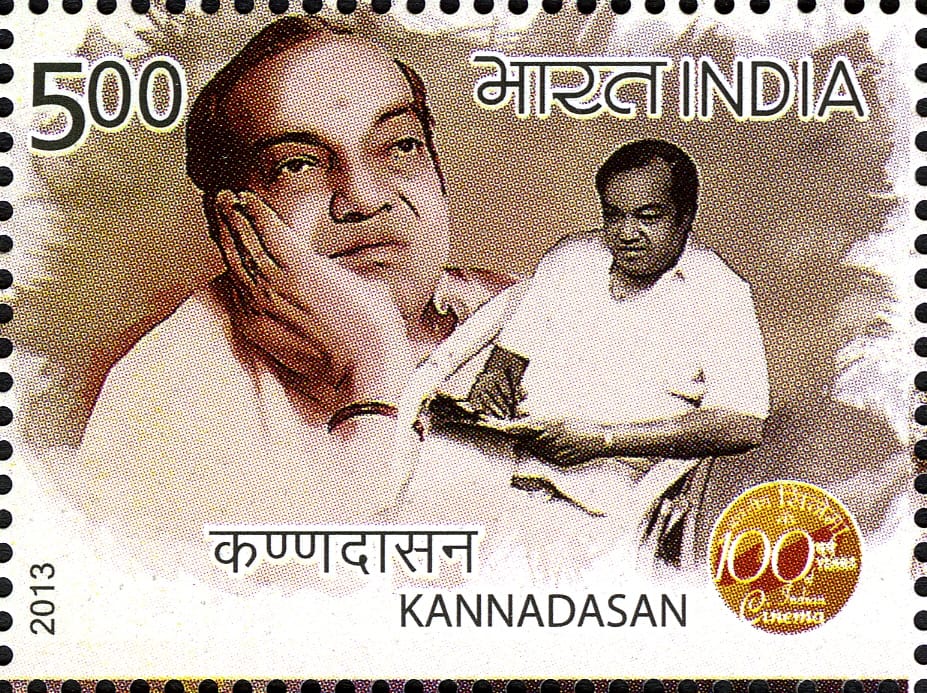
Kannadasan was an atheist in his early years, when he was active in the Dravidian movement. He later turned to spirituality and wrote the multi-volume Arthamulla Indhumatham. Critics called him inconsistent. His admirers see a man who followed his conscience and was willing to leave an ideology when it no longer matched what he believed.
Vanavasam is also unusually frank about his own life, including episodes most public figures would hide. It is often quoted by critics of the DMK against its leaders, yet in the same book Kannadasan recorded his admiration for M. Karunanidhi as a writer, saying the dialogue of Veera Abimanyu still rang in his ears.
He was not modest about his work. "Padaippathanaal en per iraivan" (I am God, because I create), he wrote in a song for Raththa Thilagam. Elsewhere he declared that death would never claim him.
Why he lasted
Some argue that cinema, the most powerful mass medium of his age, explains his reach. The Tamil scholar Pazha. Karuppaiah has answered that many lyricists worked in cinema, but only Kannadasan earned a place in public memory alongside Bharathi and Bharathidasan.
Kannadasan died in 1981. A century after his birth, the best evidence for Karuppaiah's view is ordinary: a boatman's line about calm water and floods, played on an office worker's phone, still makes sense of a hard day.
Sources
Share this story
Related articles
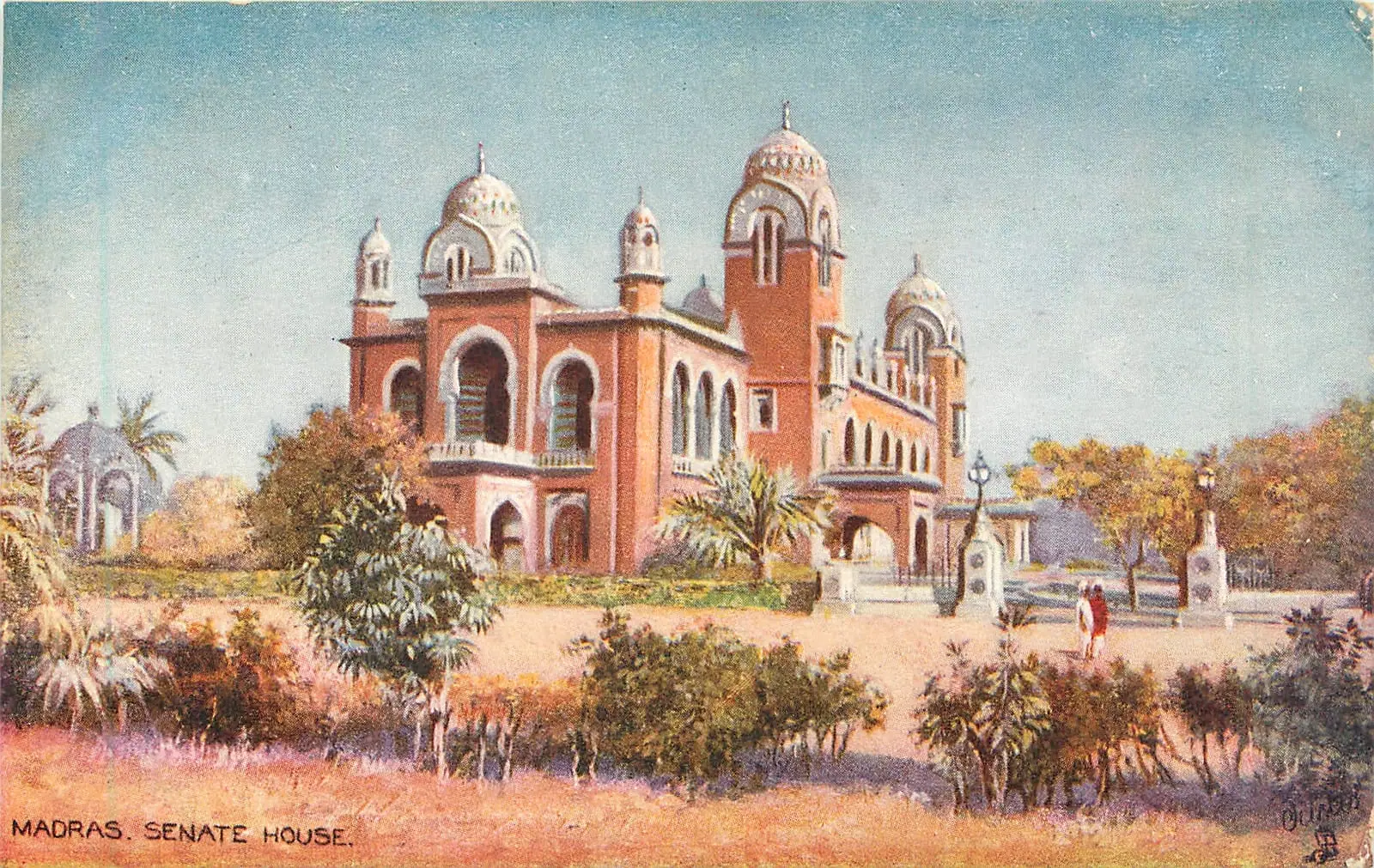
27 August 1944: at Salem, the Justice Party becomes the Dravidar Kazhagam
At its sixteenth confederation, the party gave up British titles, caste suffixes and elections, and took a new name. A rump that refused the change fought one last election in 1952.
· 2 min read
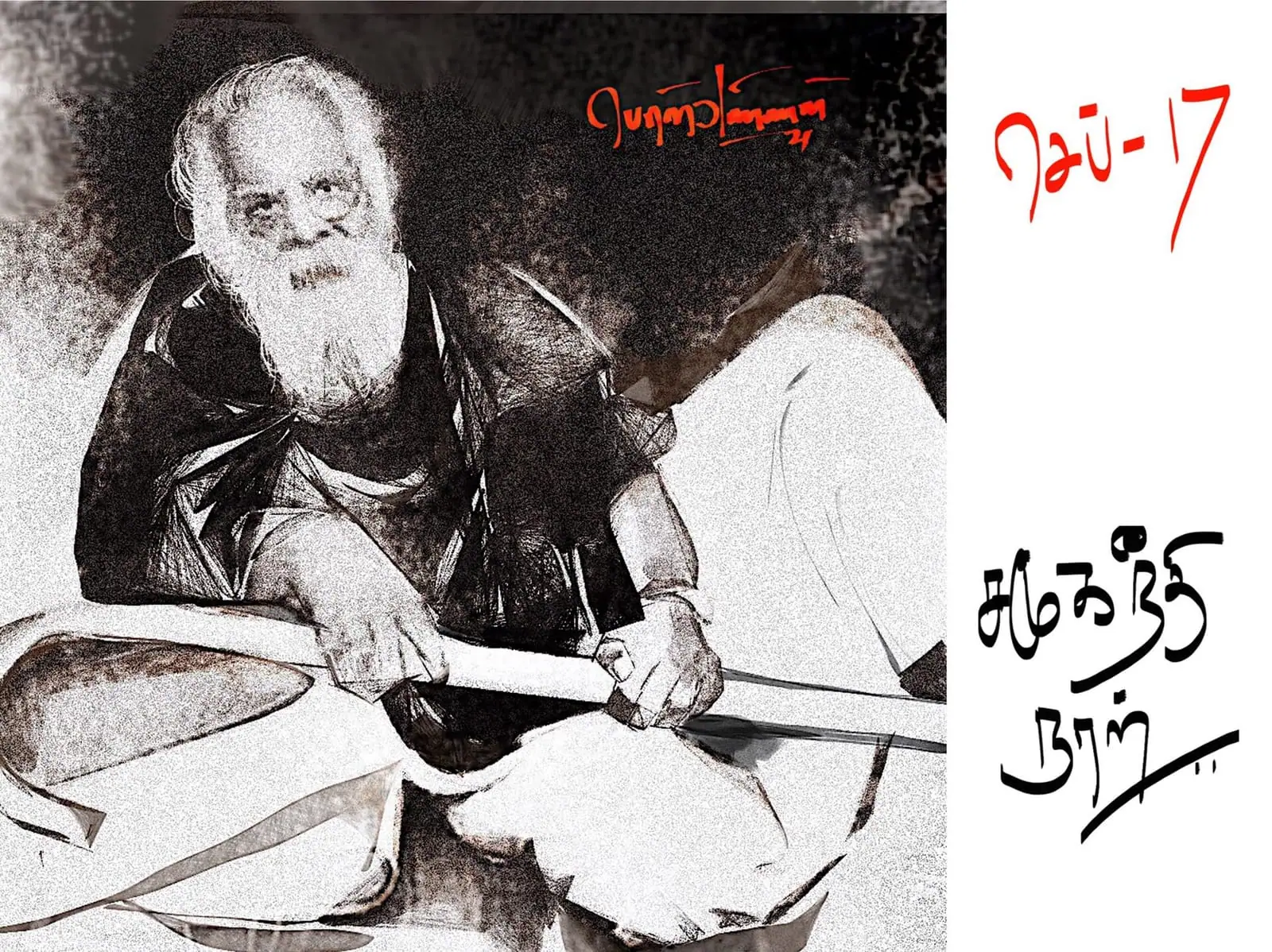
1937–40: the first anti-Hindi agitation and the Justice Party's second life
A Congress government's order making Hindi compulsory in 125 secondary schools set off thirty months of protest. Two men died, about 1,200 people were jailed, and a defeated party found a new purpose under Periyar.
· 2 min read
From Vaikom to Kudi Arasu: how the Self-Respect Movement found the Justice Party
Periyar left the Congress in 1925 and led a movement that asked for more than jobs and seats. For a decade it worked alongside the Justice Party, and in the end it took the party over.
· 2 min read
December 1920: the first elected ministry of Madras, and the limits of dyarchy
The Justice Party won 63 of 98 seats in the first elections under the Montagu–Chelmsford reforms. Its ministers soon discovered how little power "transferred subjects" really carried.
· 2 min read