From Vaikom to Kudi Arasu: how the Self-Respect Movement found the Justice Party
Periyar left the Congress in 1925 and led a movement that asked for more than jobs and seats. For a decade it worked alongside the Justice Party, and in the end it took the party over.
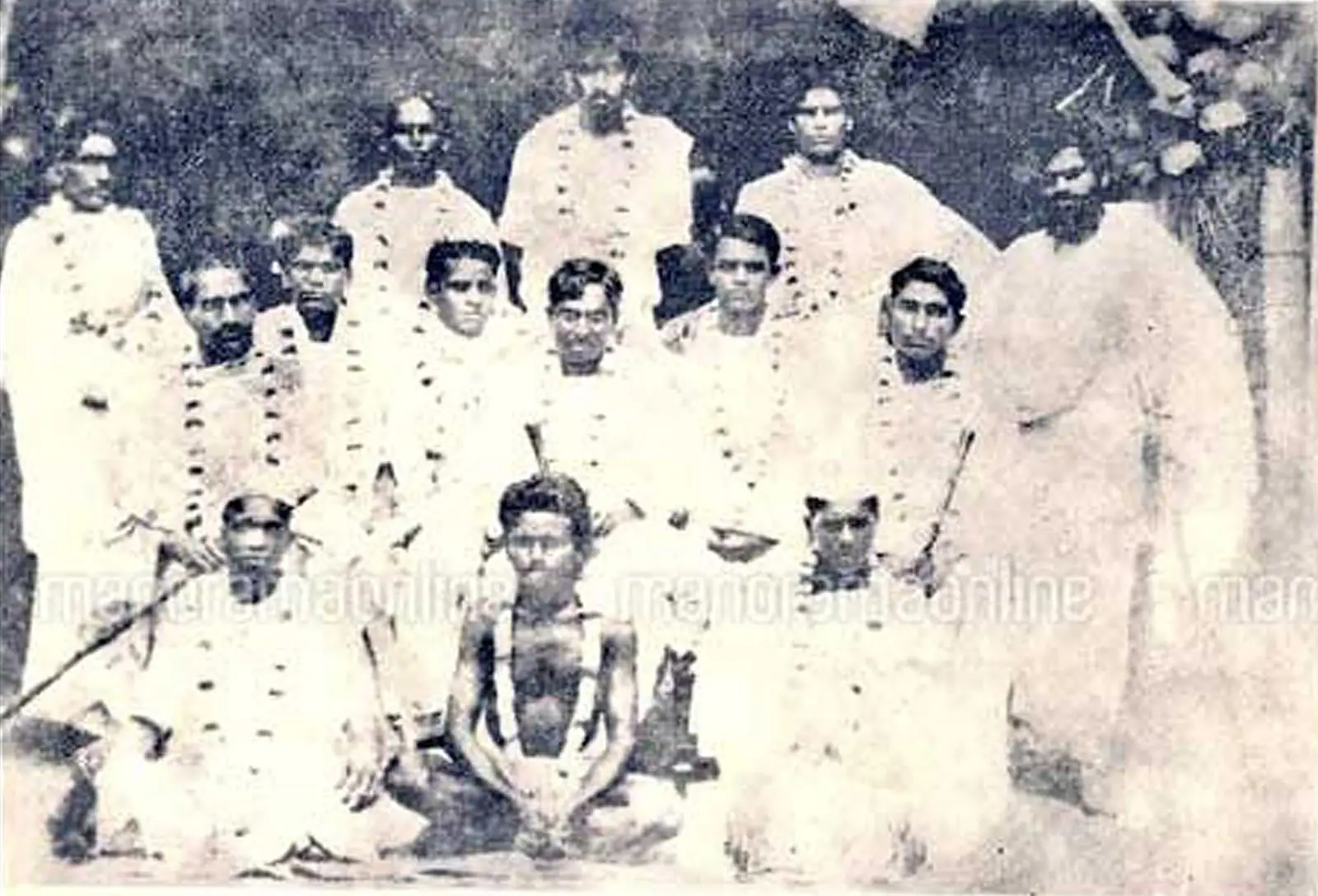
caption-h-vaikom2: A protest march during the Vaikom Satyagraha, the campaign for the right of oppressed castes to use the roads around the Vaikom temple in Travancore.
The Justice Party asked the State for a fair share of offices. The Self-Respect Movement asked something harder of society itself: to stop ranking people by birth.
The road from Vaikom
Explainer
E. V. Ramasamy joined the Indian National Congress in 1919. In 1924–25 he took part in the Vaikom Satyagraha in Travancore, a campaign for the right of oppressed castes to use public roads near the temple there, and was imprisoned twice. In 1925 he left the Congress, accusing it of serving Brahmin interests.
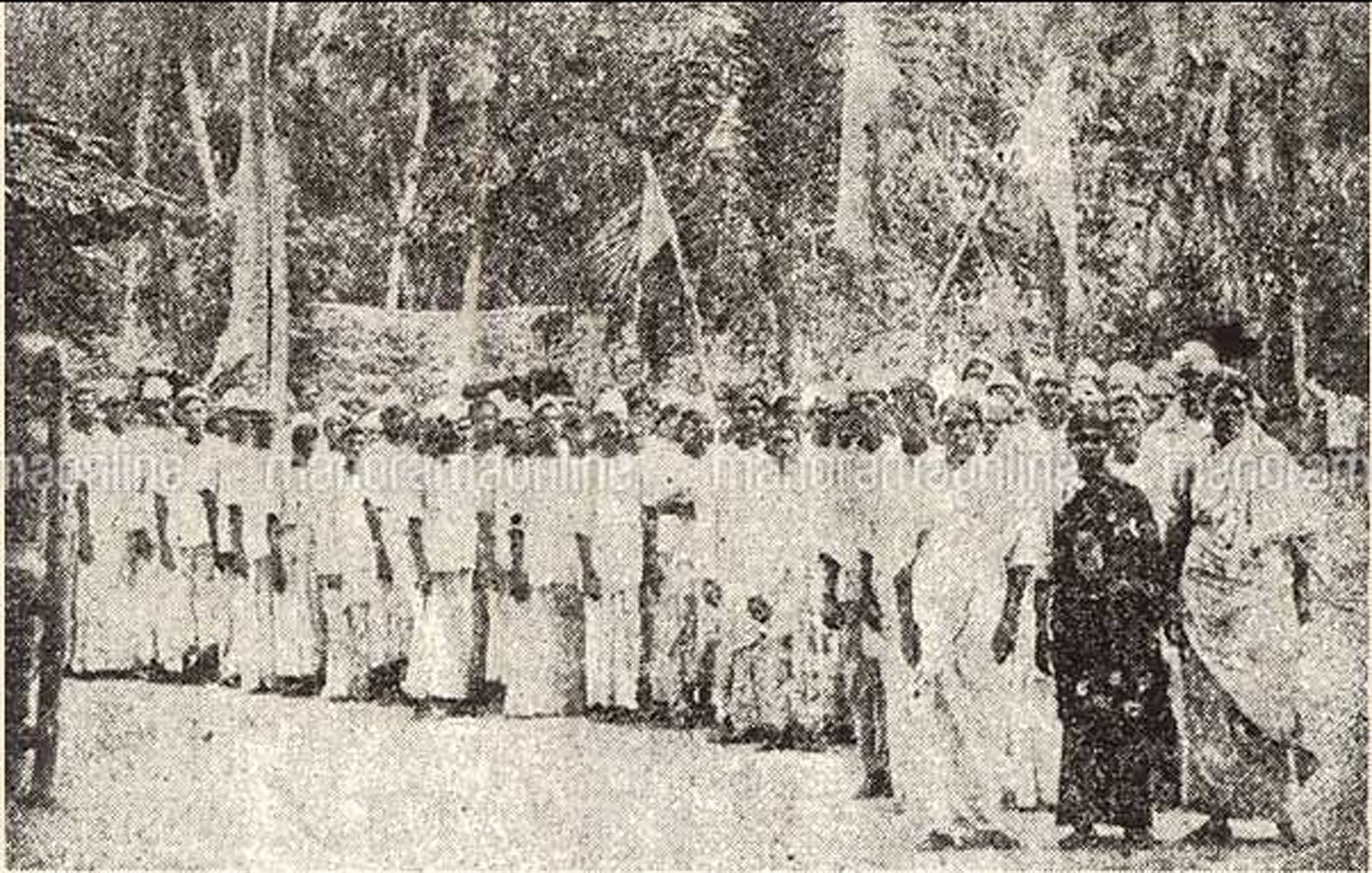
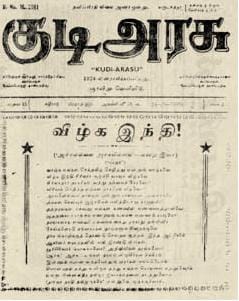
The Self-Respect Movement was founded in 1925 by S. Ramanathan, who invited Ramasamy to lead it. On 2 May 1925 Ramasamy started Kudi Arasu, a Tamil weekly published from Erode, which became the movement's mouthpiece until it closed in 1949.
What self-respect meant
Periyar argued that political freedom without social equality would mean little. One of his best-known statements on the idea is recorded in Wikipedia:
Periyar, on self-respect (as quoted in Wikipedia)"we are fit to think of 'self-respect' only when the notion of 'superior' and 'inferior' caste is banished from our land"
In practice
The movement's principles, set out at its first conference in 1929, included equality between men and women and the end of caste distinctions. Its most visible social innovation was the self-respect marriage, conducted without a Brahmin priest; such marriages were held from 1928, and the first wholly without Hindu ritual, between the writer Kuthoosi Gurusamy and Kunjidham, took place on 8 December 1929 with Periyar presiding. The movement also encouraged inter-caste marriage and the remarriage of widows.
Alliance and takeover
Periyar campaigned for Justice candidates in 1926 and 1930, and the movement worked closely with the party against the Congress. In the 1930s the party adopted the movement's socialist "Erode" programme in its election manifesto. After the party's heavy defeat in 1937, the anti-Hindi agitation brought it under Periyar's leadership; he was elected president on 29 December 1938, while in prison.
In 1944, at Salem, he turned the Justice Party into the Dravidar Kazhagam. The relationship is the key to understanding the Dravidian movement: the Justice Party supplied the institutions and the experience of government; the Self-Respect Movement supplied the social radicalism. The parties that have governed Tamil Nadu since 1967 trace their roots to both.
Sources
Share this story
Related articles
27 August 1944: at Salem, the Justice Party becomes the Dravidar Kazhagam
At its sixteenth confederation, the party gave up British titles, caste suffixes and elections, and took a new name. A rump that refused the change fought one last election in 1952.
· 2 min read
1937–40: the first anti-Hindi agitation and the Justice Party's second life
A Congress government's order making Hindi compulsory in 125 secondary schools set off thirty months of protest. Two men died, about 1,200 people were jailed, and a defeated party found a new purpose under Periyar.
· 2 min read
1 April 1921: when Madras let women vote, and what followed
The first Justice government made voter qualifications gender-neutral, among the earliest such moves in British India. Five years later Dr Muthulakshmi Reddi entered the Legislative Council.
· 2 min read
December 1920: the first elected ministry of Madras, and the limits of dyarchy
The Justice Party won 63 of 98 seats in the first elections under the Montagu–Chelmsford reforms. Its ministers soon discovered how little power "transferred subjects" really carried.
· 2 min read