27 August 1944: at Salem, the Justice Party becomes the Dravidar Kazhagam
At its sixteenth confederation, the party gave up British titles, caste suffixes and elections, and took a new name. A rump that refused the change fought one last election in 1952.
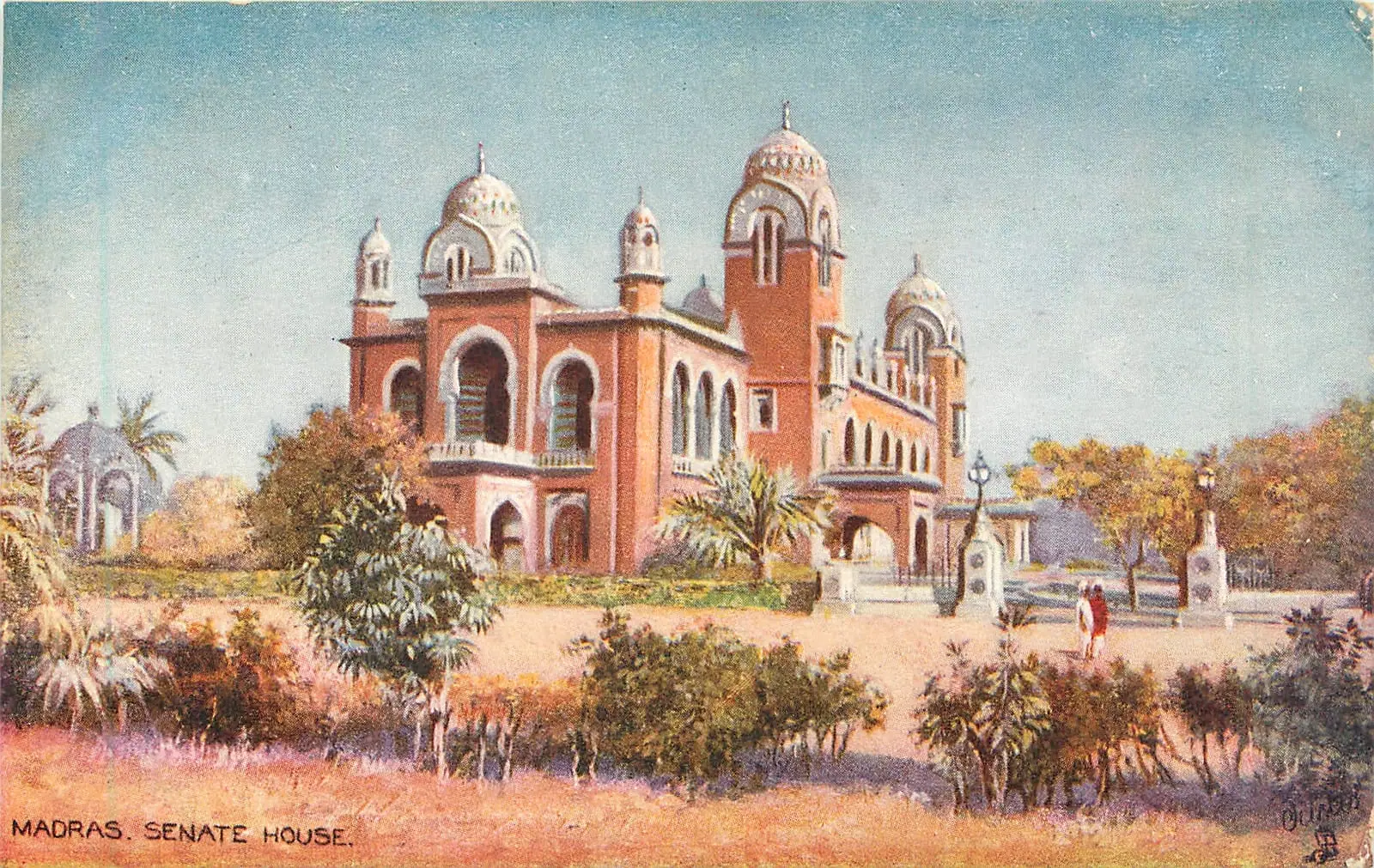
By the early 1940s the Justice Party was a shadow of the organisation that had governed Madras for thirteen years. It had been crushed in the 1937 elections, and under Periyar's presidency it had become a vehicle for the anti-Hindi agitation and the demand for a separate Dravida Nadu.
A party divided
Explainer
Not everyone accepted the change. A group of leaders, including P. Balasubramanian, editor of The Sunday Observer, R. K. Shanmugam Chettiar, P. T. Rajan and A. P. Patro, tried to remove Periyar. On 27 December 1943 they convened the executive committee and criticised him for not holding an annual meeting since 1940. Periyar answered by calling the confederation.
The Salem resolutions
On 27 August 1944, the party's sixteenth annual confederation met at Salem, and the pro-Periyar faction won control. The resolutions required members to renounce British honours and titles such as Rao Bahadur and Diwan Bahadur, to drop caste suffixes from their names, and to resign nominated and appointed posts. The party took a new name: Dravidar Kazhagam. C. N. Annadurai, who had played an important part in passing the resolutions, became general secretary.
Periyar withdrew the organisation from electoral politics and turned it into a movement for social reform. He explained his reasoning in a sentence Wikipedia records:
Periyar, on withdrawing from electoral politics (as quoted in Wikipedia)"If we obtain social self-respect, political self-respect is bound to follow"
What followed
Most members joined the Dravidar Kazhagam. A few dissidents, led first by B. Ramachandra Reddi and then by P. T. Rajan, formed a party that claimed to be the original Justice Party. It contested nine seats in the 1952 Assembly elections; Rajan was its only winner, and it did not contest again. It celebrated the party's golden jubilee in Madras in 1968.
The Dravidar Kazhagam itself split in 1949, when Annadurai and others left to form the Dravida Munnetra Kazhagam, which contested elections and came to power in 1967. Its own split in 1972 created the All India Anna Dravida Munnetra Kazhagam. Every Chief Minister of Tamil Nadu from 1967 until 2026 came from one of these two parties, both of which trace their lineage back through Salem to the meeting of November 1916.
Sources
Share this story
Related articles
1937–40: the first anti-Hindi agitation and the Justice Party's second life
A Congress government's order making Hindi compulsory in 125 secondary schools set off thirty months of protest. Two men died, about 1,200 people were jailed, and a defeated party found a new purpose under Periyar.
· 2 min read
From Vaikom to Kudi Arasu: how the Self-Respect Movement found the Justice Party
Periyar left the Congress in 1925 and led a movement that asked for more than jobs and seats. For a decade it worked alongside the Justice Party, and in the end it took the party over.
· 2 min read
December 1920: the first elected ministry of Madras, and the limits of dyarchy
The Justice Party won 63 of 98 seats in the first elections under the Montagu–Chelmsford reforms. Its ministers soon discovered how little power "transferred subjects" really carried.
· 2 min read
26 February 1917: the newspaper that gave a party its name
Justice, edited without pay by Dr T. M. Nair, became so identified with the movement that the South Indian Liberal Federation came to be called the Justice Party. Its pages show both the movement's courage and its blind spots.
· 2 min read