Opinion
Two languages on paper, three on the road: the TVK government must answer the signboard question
The state orders Tamil boards for shopkeepers and puts Hindi on its own highways. The Sathankulam signboard is not a clerical error — it is a mirror of a government that has a two-language policy on paper and no one accountable for it on the ground.
A language policy is only as real as the last signboard it produces. By that measure, the Tamil Nadu government's two-language policy met its test this week on a state highway in Sathankulam — and failed it in three scripts.
The State Highways Department installed direction boards carrying Thirunelveli, Alwarthirunagari, Thoothukudi and Tiruchendur in Tamil, English and Hindi. When the photographs went viral, the Hindi text was quietly removed. No explanation has been offered for how a third language found its way onto a state highway board in a state that officially recognises two.
This is not a clerical error. Clerical errors do not choose, in large letters, precisely the language whose imposition Tamil Nadu has resisted for nearly a century. Clerical errors do not survive procurement, printing and installation. What the board reveals is a governance habit far more dangerous: nobody, at any level of this government, appears to own the two-language policy. It is announced at press meets, defended in assembly speeches, and abandoned at the roadside.
The contradiction is sharp enough to be embarrassing. The same government that recently ordered commercial establishments to shift their name-boards from English to Tamil has, through its own department, installed boards with Hindi on them. A shopkeeper in Thoothukudi faces an order; the Highways Department faces nothing. One law for the citizen, none for the state.
M.K. Stalin's charge of a "U-turn" lands because the public can see the arithmetic for itself. It is one thing to resist the Centre's three-language push in principle; it is another to have your own departments implement it in practice. When the government of Tamil Nadu cannot guarantee that a state highway board follows state language policy, what guarantee can it offer on anything else it announces?
The Dravidian movement built its two-language promise on a simple principle: language is not ornament, it is power — the power to read, to question, to belong. A signboard is where the state talks to the people. If the state cannot decide which language to talk in, it is not the signboard that is confused. It is the state.
The board has been repainted. The question has not. The TVK government owes Tamil Nadu an answer: who authorised the Hindi text, and who will be held accountable?
Sources
Share this story
Related articles
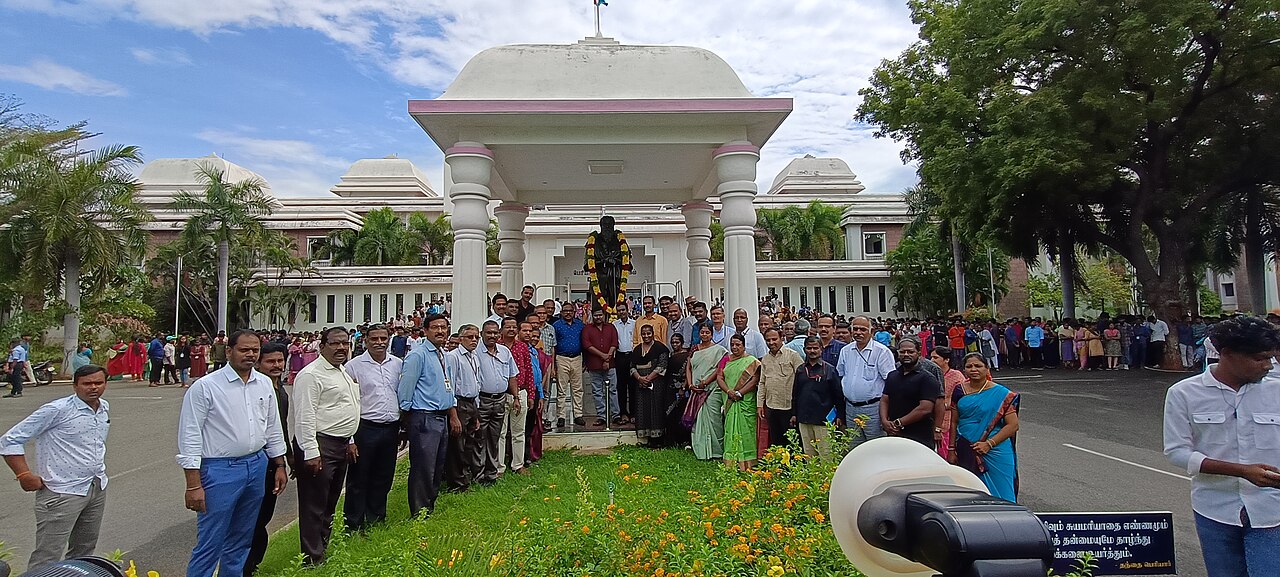
Opinion: Care is work, and work deserves permanence
Chennai's contract nurses were not asking for a favour. They were asking the state to recognise care as skilled work, with pay, security and a future.
· 2 min read
Opinion: Who eats, who waits, and who is only heard after the cameras arrive
A tonne of ration rice seized in Ranipet and an 87-year-old carried out of her Madrid home tell the same story: systems that count stock and title first, and people only when forced. Periyar's question still stands: who eats, who waits, and who is heard too late?
· 2 min read
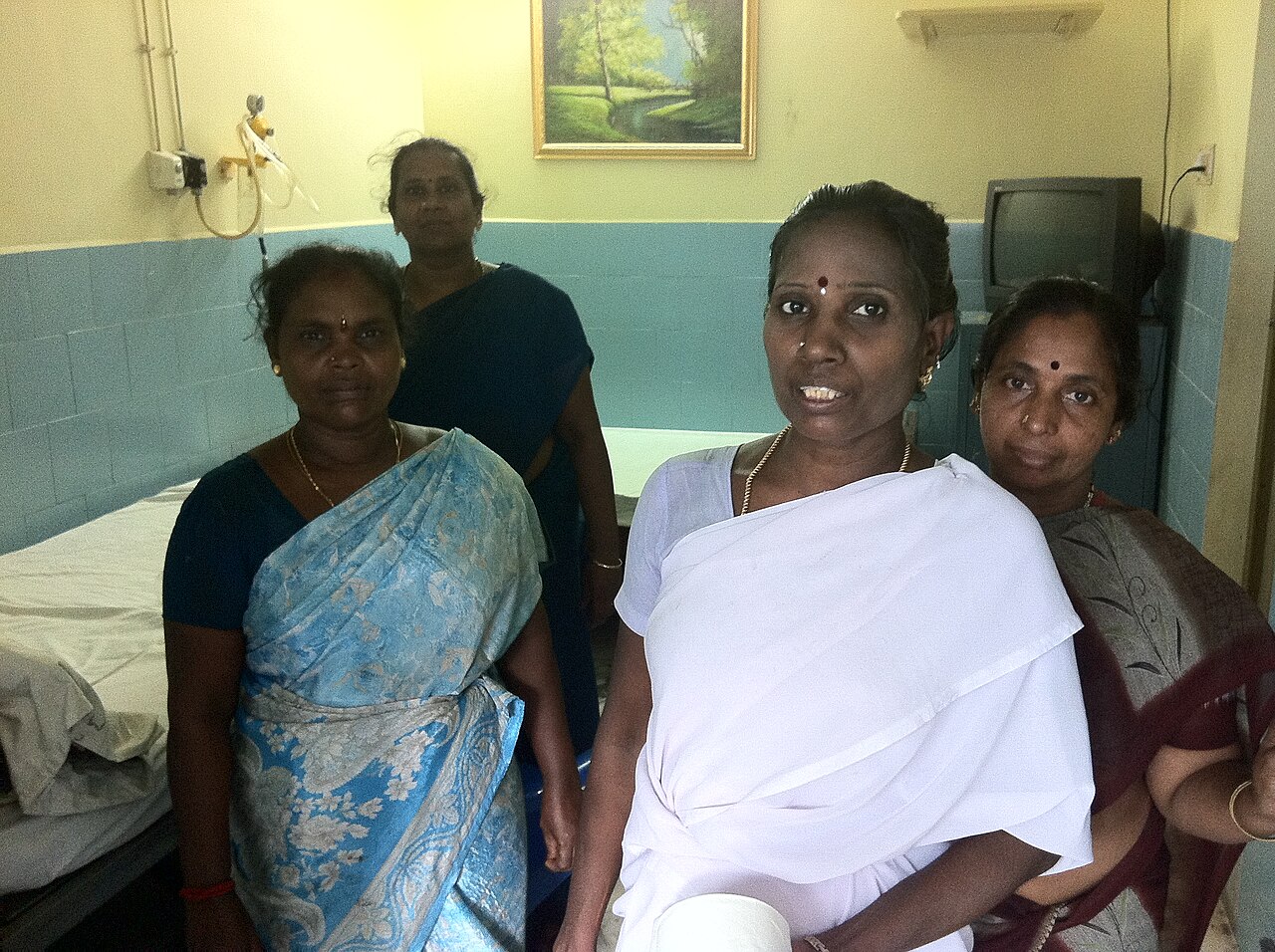
Invited to talk, taken away by police: Chennai nurses say the TVK government betrayed them
Contract nurses on hunger strike in Chennai say five leaders were detained after being called to the Secretariat for talks. Their protest is paused until November 3, but the questions on pay and permanence remain.
· 2 min read
Opinion: An airworthiness certificate must never look like it is for sale
A Chennai bribery arrest inside aviation's safety regulator is not only a crime story. It is a test of whether public systems protect ordinary people who cannot inspect the machine they are asked to trust.
· 2 min read