Opinion
NEET is not merit, it is monopoly: the case for ending the single exam
A single national entrance test rewards coaching-class privilege, not talent. It shuts out rural, Tamil-medium and first-generation learners while paper leaks rot its credibility. Tamil Nadu's fight against NEET — from Assembly resolutions to the anti-NEET signature campaign — is social justice in Periyar's lineage.
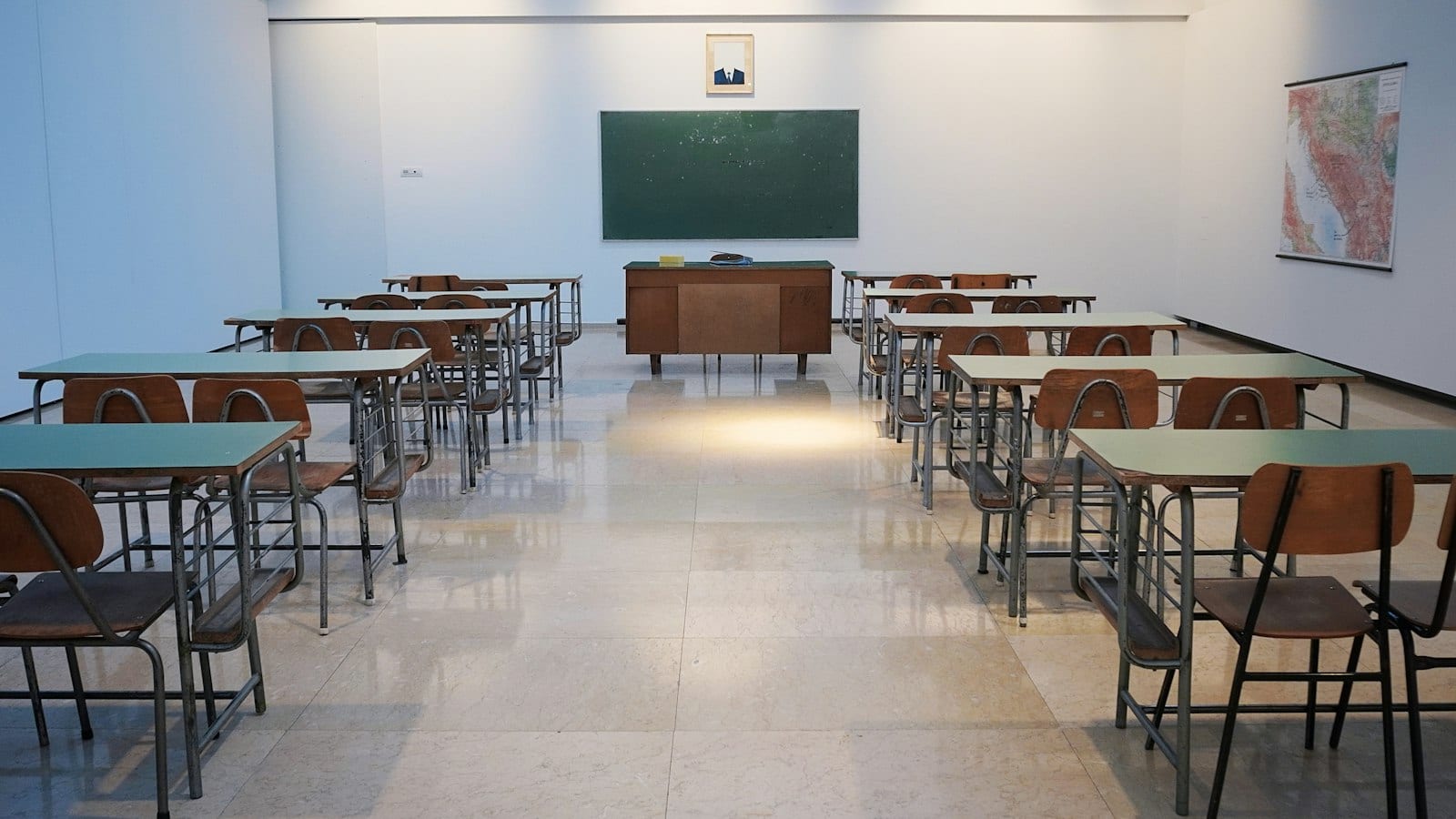
They call it merit. Every year, millions of seventeen-year-olds sit for a three-hour paper, and we are told that whoever clears it deserves a doctor's white coat while the rest simply did not work hard enough. But merit that can be bought is not merit at all. It is monopoly — a monopoly of coaching fees, urban English-medium schooling and family money — wearing merit's clothes. That is what the National Eligibility cum Entrance Test has become, and that is why the fight to end it is not parochial politics but one of the great social justice causes of our time.
Consider what a single national entrance exam actually tests. Not twelve years of schooling — the resolution Tamil Nadu's Assembly adopted this August put it plainly: a single day's test, rather than twelve years of school education, now determines the course of a student's life. It does not test curiosity, diligence, or the capacity to heal. It tests access: access to coaching factories in Kota and Chennai that charge lakhs a year, to English-medium instruction, to the quiet confidence that comes from having seen this kind of question paper before. The child of a farm labourer in Villupuram who tops her Tamil-medium government school can study every night of the year and still walk into the exam hall a stranger. The child of a doctor in Adyar walks in like a regular. To call the gap between them "merit" is to mistake the starting line for the finish.
Defenders of NEET reply that a common exam ended capitation-fee corruption and standardised quality. But the exam has merely moved the price tag. The corruption it was supposed to cure now lives in leaked question papers and cancelled exams — NEET-UG 2026 itself was cancelled in May amid a paper-leak storm, a scandal that shredded whatever credibility the test still claimed. And standardisation? A test that cannot be administered honestly cannot standardise anything except anxiety.
Tamil Nadu saw this from the start, and its resistance deserves to be understood as principle, not reflex. This is the state of the Justice Party and Periyar, where social justice is not a slogan but the foundation of public life — the first in India to legislate communal reservation, the state that treated the classroom as the frontline of equality a century ago. When the Assembly passed the 2021 Bill to exempt the state from NEET, when it has repeatedly adopted resolutions demanding the exam's abolition — most recently this August, unanimously, with only the lone BJP member walking out — it was defending a simple proposition: that a government-school child's Class XII marks, earned over years, are a fairer measure than a coaching industry's three-hour lottery.
The struggle has also gone to the streets and the signature sheet. Former deputy chief minister Udhayanidhi Stalin's "NEET Vilakku, Nam Ilakku" campaign sought fifty lakh signatures in fifty days, carrying the demand beyond the legislature into homes and colleges. Petitions for a nationwide ban continue to gather support. This is what a democratic movement for equal opportunity looks like: resolutions, signatures, arguments — not the quiet despair of students who take their own lives when the coaching promise fails them. Every suicide linked to this exam is an indictment not of the child but of a system that told her she was the problem.
There is a deeper constitutional question too. Education sits on the Concurrent List, and the demand to move it to the State List — voiced again in the Assembly this August — is not separatism; it is federalism. A country of Tamil-medium and Hindi-medium children, of CBSE syllabi and state-board syllabi, cannot be judged by one paper written in one pedagogical universe. States that built strong public school systems should be free to honour the students those systems produce.
The alternative is not chaos. It is what Tamil Nadu practised before NEET: admission on the basis of qualifying examination marks, with the 7.5 per cent reservation for government-school students protecting the most vulnerable. Imperfect, yes — every system is — but honest about what it measures, and open to correction through democratic politics rather than a black-box testing agency.
None of this is an argument against standards in medicine. It is an argument about who gets to meet them. A doctor's competence is built in medical college, in wards and laboratories, over five and a half years — not certified by a multiple-choice sprint at seventeen. If we truly want the best healers, we should widen the door, not narrow it to those who could afford the key.
Periyar taught that justice is not the gift of the privileged but the right of the oppressed, taken through struggle. The campaign against NEET — in assembly halls, on signature sheets, in the stubborn refusal of a state to accept that its children are second-class — belongs to that lineage. Kill the single exam, and let merit breathe again.
Sources
Share this story
Related articles
A street should not carry a caste
The High Court has done what successive governments promised in 1978 and never finished. The State's status report must be honest, public and followed by a deadline.
· 2 min read
Madras High Court opens suo motu case to strip caste names from Tamil Nadu's streets
A Division Bench led by Chief Justice Sushrut Arvind Dharmadhikari has given the State four weeks to report which caste appellations on streets, roads and localities have been removed, and which still remain, nearly five decades after a 1978 order first demanded it.
· 4 min read

A crore on the metro, a crater on Barracks Road: Chennai's two-speed infrastructure is a political choice
In September, Chennai Metro carried over a crore of passengers for the third straight month. In the same city, Perambur Barracks Road caved in twice in weeks, opening a 20-foot crater. One city, two infrastructures — and the gap between them is where a government's priorities are judged.
· 2 min read

Two languages on paper, three on the road: the TVK government must answer the signboard question
The state orders Tamil boards for shopkeepers and puts Hindi on its own highways. The Sathankulam signboard is not a clerical error — it is a mirror of a government that has a two-language policy on paper and no one accountable for it on the ground.
· 2 min read