Opinion
Opinion: A meditation hall is not a security threat
The Madras High Court was right to demand honest disclosure under FCRA. It was wrong to grade religions from the Bench. The state may regulate conduct; it must never rank faiths.
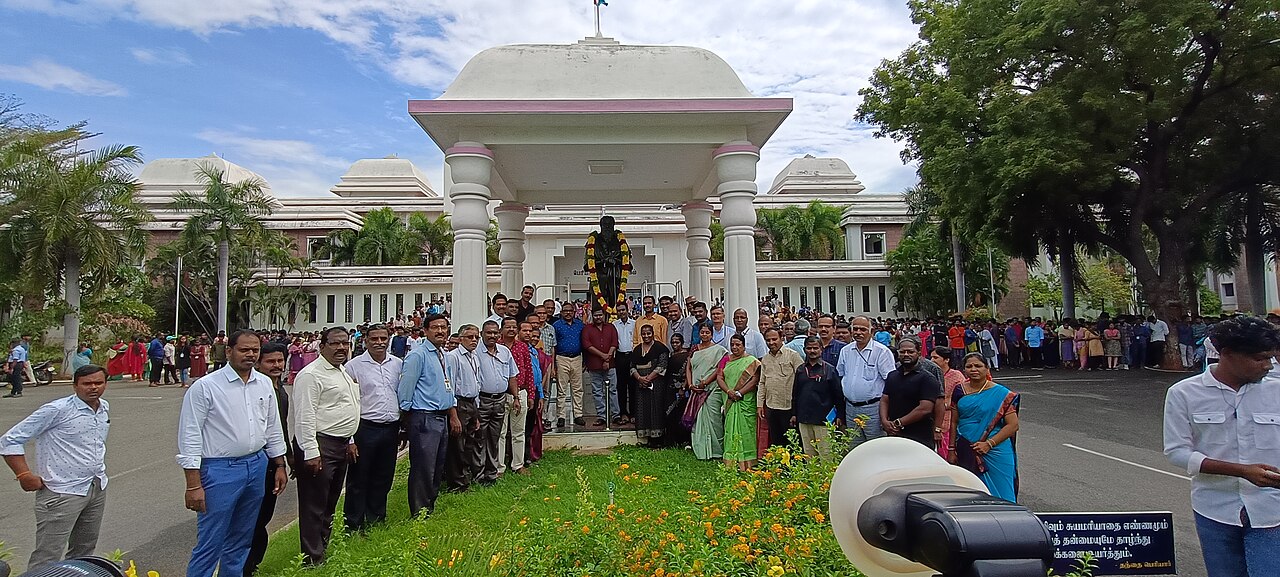
There are two judgments inside the Madras High Court's FCRA ruling this week, and they deserve two different responses.
The first is a judgment about paperwork, and it is hard to quarrel with. The Foreign Contribution (Regulation) Act asks every applicant to say what it is: religious, cultural, educational, social. The Kanzeon trust ran a Zen meditation centre in Kodaikanal, claimed the Dhyana tradition of India, and did not declare itself a religious organisation. The Madurai Bench held that a trust which subscribes to Zen Buddhist philosophy must say so on Form FC-3A. Honest disclosure is not persecution; it is the minimum price of handling other people's money across borders. On that, the Court is right.
The second judgment is about theology, and no court should be writing it. From the Bench came the observation that Abrahamic religions are inherently exclusive while Hinduism is inclusive, and the remark that radical Christian institutions are notorious for conversion activity. The Bench clarified that it was not accusing this particular trust of a conversion agenda. That clarification is precisely the problem. A generalisation about entire faiths, entered into a court record against an applicant the Court itself absolves, is not reasoning. It is a ranking of religions by the state, delivered in the vocabulary of a judgment.
Periyar spent a lifetime arguing that the state must stand at an equal distance from every god, and Anna and Kalaignar built a politics on the same foundation: regulate conduct, protect the vulnerable, and never, ever let the government decide which faith is wholesome and which is suspect. The Dravidian idea of secularism is not hostility to religion. It is the refusal to grade it.
The conversion clause itself shows why. The Bench rightly noted that Section 12(4)(a)(ii) cuts every way: a Hindu organisation running Ghar Wapsi with foreign money would fail the same test. That even-handedness is the clause's only legitimacy. The moment the clause is administered through a prior belief that some faiths are notorious and others are inclusive, even-handedness dies, and what remains is a licensing system for minority charities whose schools, hospitals and hostels across Tamil Nadu run on declared donations and audited accounts.
Foreign funding of religious conversion can be prohibited. Fraudulent disclosure can be punished. Both are questions of conduct, provable with evidence. But a meditation hall in Kodaikanal is not a security threat because a priest founded it, and a republic that asks its courts to certify which religions are inclusive has already surrendered the neutrality that makes its secular promise worth anything.
Keep the disclosure rule. Enforce it against every trust, temple, church and mosque alike. And strike the theology from the record. The Constitution grades no one's faith, and neither should its courts.
Sources
Share this story
Related articles

'Conversion' organisations to be denied FCRA registration, Madras High Court rules in Zen trust case
The Madurai Bench has upheld the Centre's refusal of FCRA registration to a Kodaikanal Zen meditation trust, holding that groups engaged in religious conversion cannot receive foreign funds and that applicants must declare their religious character honestly.
· 2 min read
Opinion: When the umpire will not meet the players, the match itself is in doubt
An opposition trimmed to ten names still cannot get a presidential appointment, and a Dalit leader's question about Tamil Nadu's roll will not go away. Democracy needs a referee who answers.
· 2 min read
Opinion: A fan that stops at noon, a wage that never arrives - the dignity test the state keeps failing
In Chennai the fan stops at 9am. In Jammu the wage stops at Rs 8,000. Periyar asked who bears the burden, Anna asked whether work carries dignity. By that measure, the modern state still publishes notices where it should publish justice.
· 2 min read
Opinion: Care is work, and work deserves permanence
Chennai's contract nurses were not asking for a favour. They were asking the state to recognise care as skilled work, with pay, security and a future.
· 2 min read