Opinion
The signboard is never just a signboard: Tamil Nadu's language vigilance is the Dravidian dividend
From the 1965 anti-Hindi agitation to this week's Hindi boards in Thoothukudi, every 'mistake' that needs opposition outrage to fix is a test balloon. A government that runs on reels cannot be trusted with a language built on struggle.
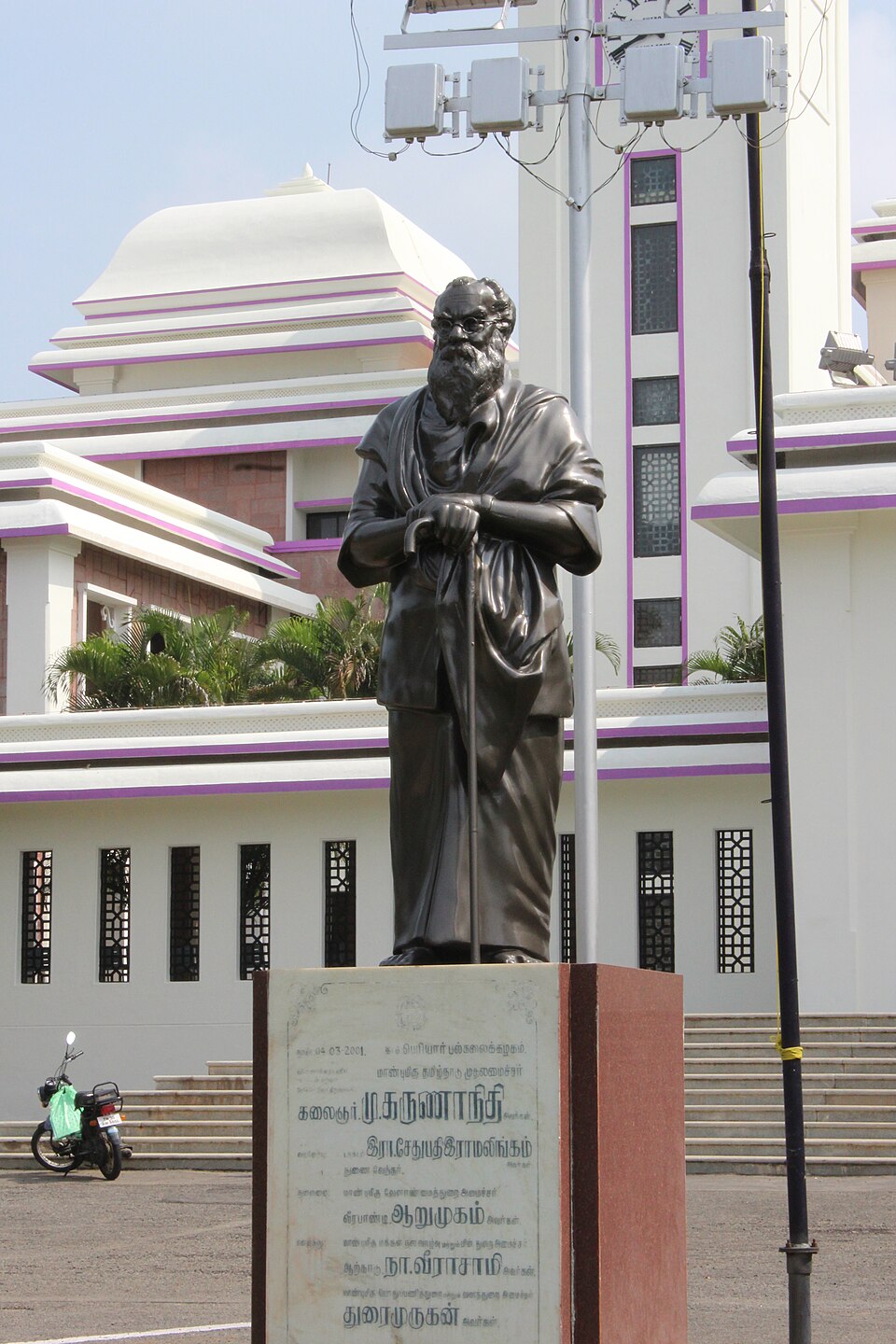
The signboard is never just a signboard. When Hindi appeared on the Sathankulam–Nazareth highway in Thoothukudi district this week, and two highways engineers were suspended for it, Tamil Nadu was not witnessing a clerical error being corrected. It was witnessing a ritual this state knows by heart: a test balloon, an outrage, a U-turn — and a government hoping the arithmetic of suspensions will be mistaken for a principle.
This is how it always begins. Nobody announces that the two-language policy is over. Nobody stands up and says Tamil Nadu will now accept three languages, or that Hindi will now sit beside Tamil on the state's signposts by design rather than by 'mistake'. Instead, a board goes up in a district far from the secretariat's gaze. The opposition notices, the street notices, and then — only then — the government discovers that a terrible error was made by two assistant-level engineers who will now pay for it with their careers.
Ask the question M. K. Stalin asked on Friday: is this yet another attempt to test the waters and U-turn once opposition emerges? The 'reels government for North Indian influencers' line stings because it names the audience. A government fluent in the influencer idiom — announcements as content, governance as performance — will always be tempted to stage Tamil Nadu for viewers who do not live here, speak here, or bury their dead here.
The two-language policy is not an administrative preference. It is the settlement of 1965, written in the blood of the anti-Hindi agitation, carried forward by Periyar, Anna and Kalaignar as a civilisational position: that Tamil is not one language among many in a marketplace of tongues, but the ground on which a people's self-respect stands. A board in Hindi on a Tamil Nadu highway is not a translation choice. It is a claim about who this state belongs to.
None of this absolves anyone of the bypoll cynicism in the air — the same government suspended for language excess is accused by the Left of leading the cash-for-votes race in Madurantakam and Dharapuram. But that is precisely the point: an administration that treats everything as a trial balloon — money on polling eve, Hindi on highway boards — has no fixed positions, only floating ones, waiting to see which way the wind blows.
Tamil Nadu has kept its language for sixty years not by trusting governments, but by distrusting them on this one question — by keeping the outrage ready, the vigilance sharp, and the memory of 1965 warm. Every signboard that needs a scandal to be fixed is proof the vigilance still works. The day the boards go up and nobody objects will be the day the test balloon stops being a test.
Keep popping them.
Sources
Share this story
Related articles
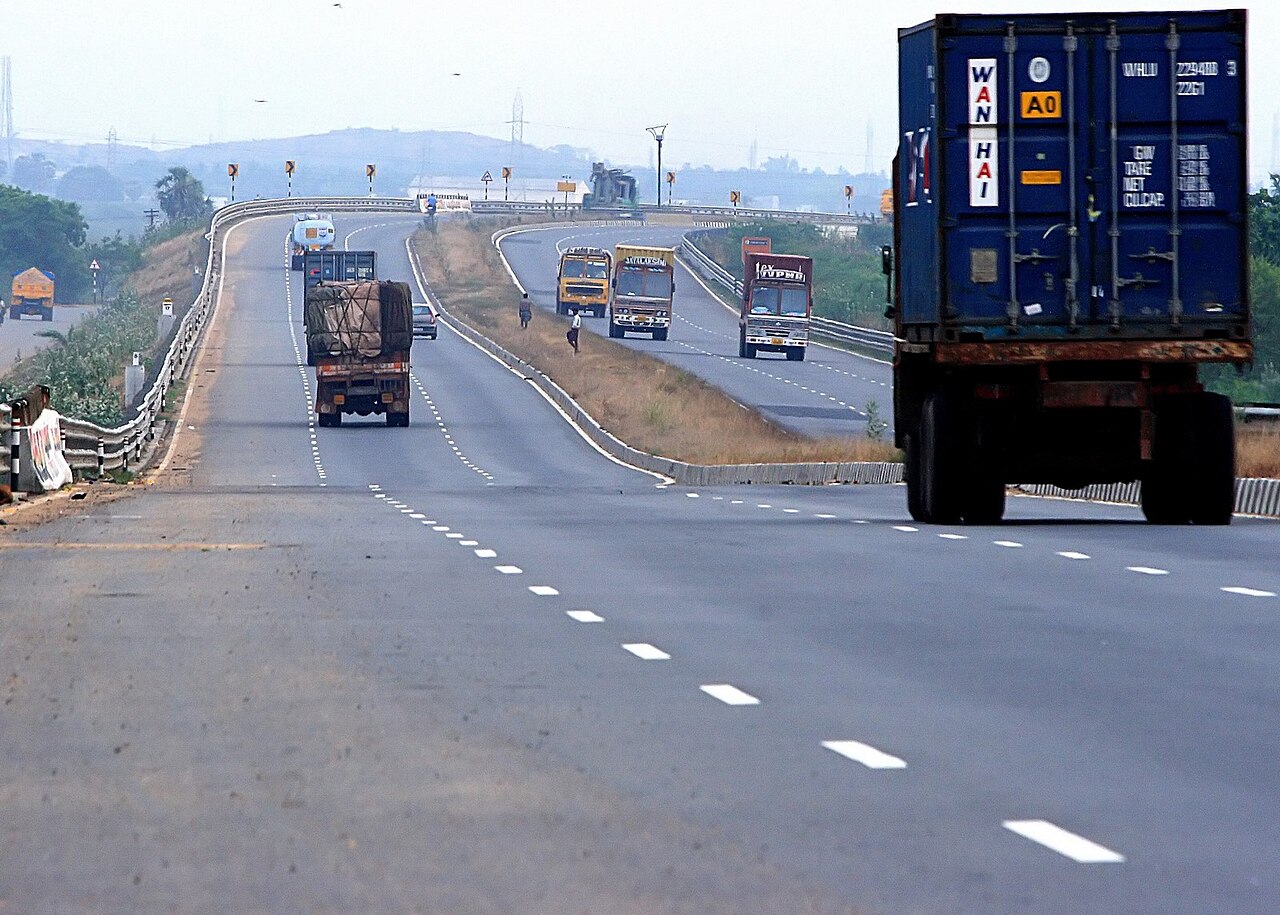
Stalin calls TVK a 'reels government' for North Indian influencers as Hindi signboard row deepens
On the final day of bypoll campaigning, DMK chief M. K. Stalin accused the TVK government of attempting Hindi imposition and of running a 'reels government for North Indian influencers', asking if every policy is first a test balloon and then a U-turn.
· 2 min read
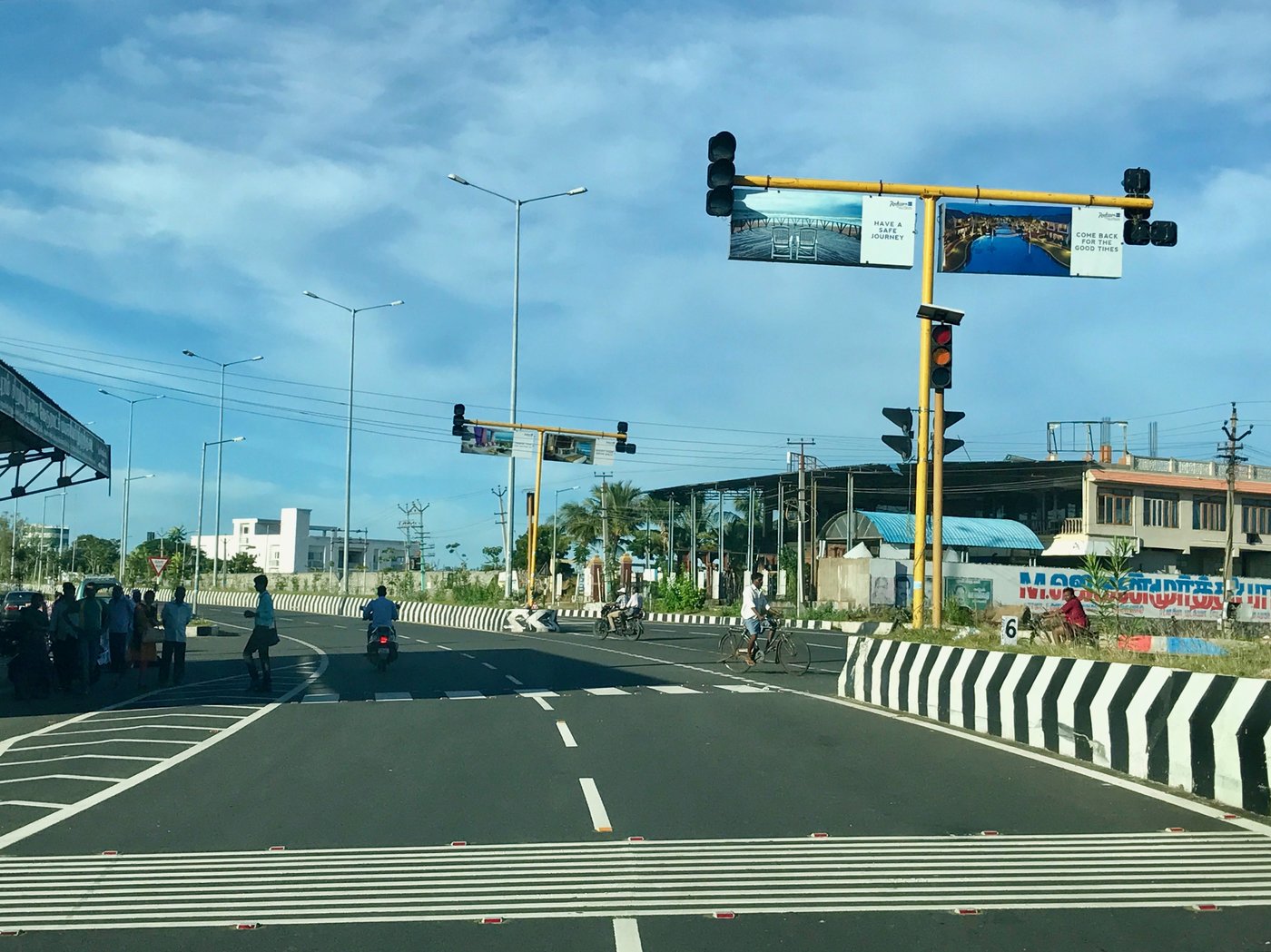
Two highways engineers suspended as TVK government acts on Hindi words in Sathankulam signboard
The Tamil Nadu government has suspended two assistant engineers of the Highways Department after destination names appeared in Hindi on a new signboard on State Highway 93 near Sathankulam, violating the state's Tamil-and-English-only language policy. Departmental action has been initiated against both.
· 1 min read
'Pure force'? The bypolls are auctioning TVK's promise of change
The party elected as a 'pure force' against money politics now stands accused — by its own Left allies — of topping cash distribution in the October 6 bypolls. On Madurantakam and Dharapuram, manufactured elections, and the auction of a promise.
· 2 min read
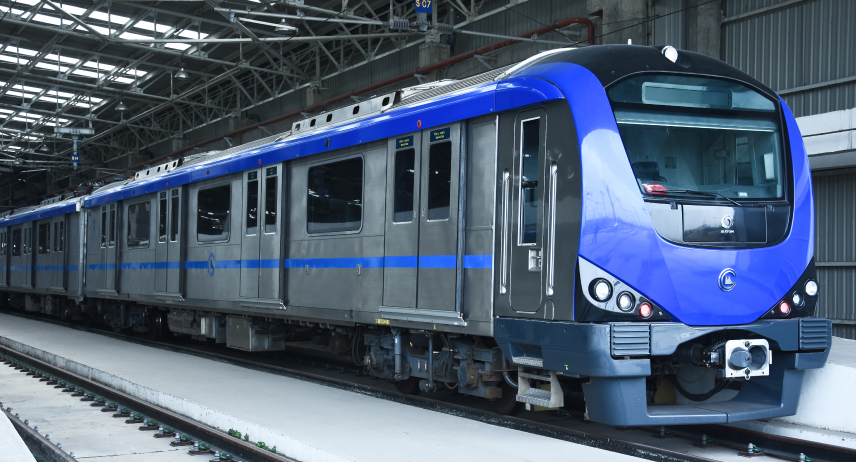
A crore on the metro, a crater on Barracks Road: Chennai's two-speed infrastructure is a political choice
In September, Chennai Metro carried over a crore of passengers for the third straight month. In the same city, Perambur Barracks Road caved in twice in weeks, opening a 20-foot crater. One city, two infrastructures — and the gap between them is where a government's priorities are judged.
· 2 min read