Opinion
The question is the citizen's right: a government that fears questions fears its people
The TVK government's attempt to place its law-and-order department beyond the reach of the RTI Act — revoked within days under pressure — reveals a ruling instinct hostile to scrutiny. Periyar taught us to question everything; a Dravidian government should know the question is not an insult, it is the citizen's right.
For six days last month, the Tamil Nadu government tried to do something extraordinary: it tried to make the citizen stop asking questions. Government Order Ms No. 57, dated September 21, classified the Public (Law and Order) Department as an "intelligence and security organisation" under Section 24(4) of the RTI Act, 2005 — placing beyond the citizen's reach the very records that concern police firings, custodial deaths, alleged torture and preventive detention.
The order collapsed within days. Opposition parties, transparency campaigners — and even the ruling TVK's own allies, the Congress and the VCK — rose against it, and Law Minister C T R Nirmal Kumar announced its withdrawal on September 27, barely an hour after he had defended it. The government offered no explanation for issuing the order, and none for revoking it.
This newspaper does not celebrate the retreat; it records the instinct. A government that moves, on its own, to shield its policing records from public scrutiny has told us how it thinks about the citizen: as a subject to be managed, not a sovereign to be answered.
Periyar's rationalism — the philosophical bedrock of the Dravidian movement — begins with the right to question. To question everything was not a slogan for the opposition benches; it was a discipline for power itself. A movement born of the Justice paper, which made the colonial state answerable in print, should need no reminding that transparency is not a favour the state grants. It is a right the citizen holds.
And the record beyond this one order is damning. The Satark Nagrik Sangathan's 2024–25 report found more than 41,000 appeals and complaints pending before the Tamil Nadu State Information Commission as of June — a commission functioning with four of its eight sanctioned Information Commissioners and no Chief Information Commissioner at all. You do not need to exempt departments from the RTI Act when you have already starved the institution that enforces it.
The TVK government came to power promising a new politics. New politics was supposed to mean cleaner politics — not a law-and-order department quietly reclassified as a spy agency in a gazette notification. Inexperience is the kindest explanation available; disdain for scrutiny is the other. Neither flatters the incumbent.
The demand, then, is simple and it is old: fill the Information Commission, clear the backlog, and publish — proactively, routinely — the records of policing that the citizen has every right to see. The question is the citizen's right. A government that fears questions fears its own people.
Sources
Share this story
Related articles
The U-turn on RTI: a government that fears questions will always fear its people
The TVK government revoked its order shielding the law-and-order department from the RTI Act within six days of public outrage. The reversal is welcome — but the real question is why a government elected on the promise of change ever thought transparency was optional.
· 2 min read

Two languages on paper, three on the road: the TVK government must answer the signboard question
The state orders Tamil boards for shopkeepers and puts Hindi on its own highways. The Sathankulam signboard is not a clerical error — it is a mirror of a government that has a two-language policy on paper and no one accountable for it on the ground.
· 2 min read
The revenue question: when India's tax kitty booms but Tamil Nadu's shrinks, the government must answer
September's GST data is unambiguous: India collected 14.7 per cent more, Tamil Nadu collected 5 per cent less. A government that claims administrative competence cannot shrug off a shrinking tax kitty in a booming economy.
· 2 min read
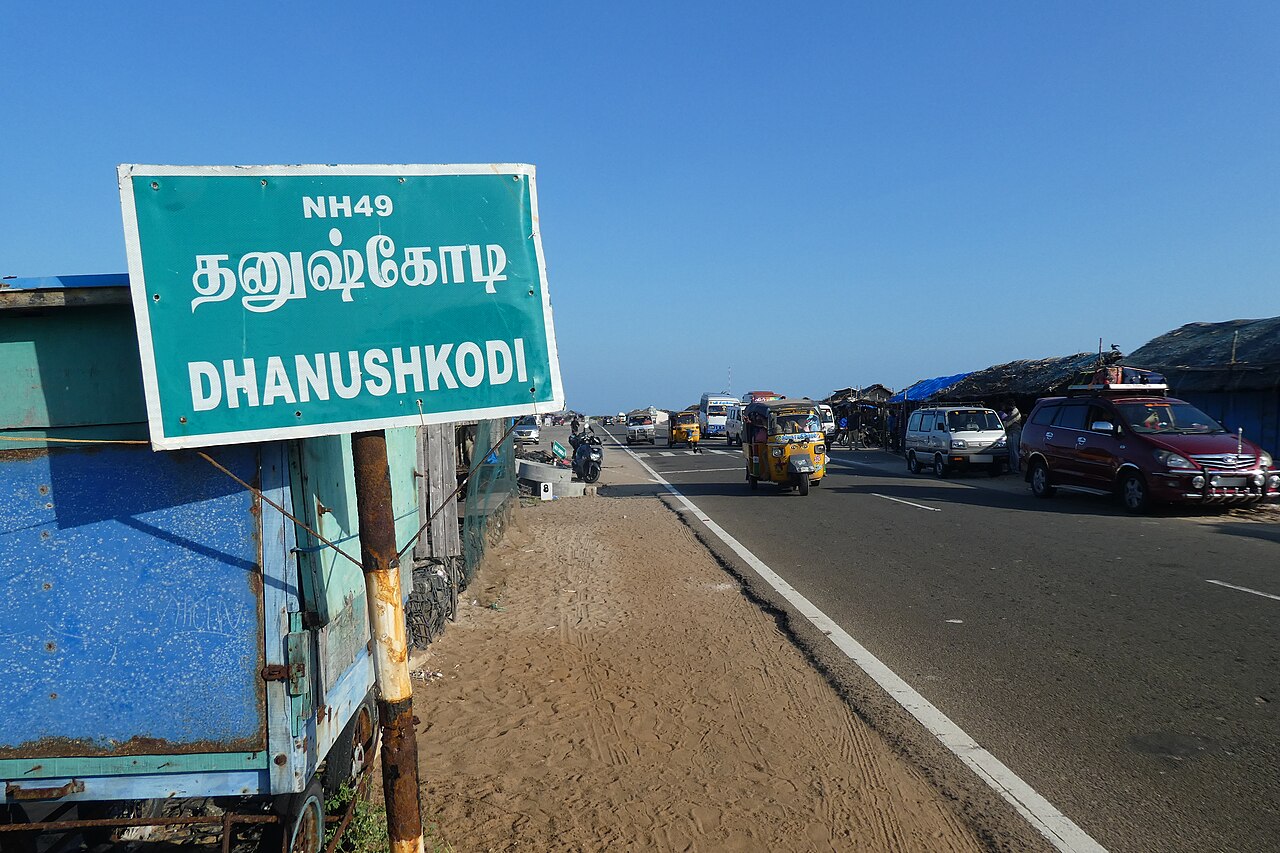
Hindi letters on a Sathankulam highway signboard spark language row; Stalin accuses TVK government of a 'U-turn'
New direction boards on the Sathankulam–Nazareth stretch of State Highway 93 carry destination names in Tamil, English and Hindi, triggering a language controversy. DMK president M.K. Stalin accused the TVK government of doing what it once condemned — and reports suggest the Hindi text has since been removed from the board.
· 1 min read