Opinion
The democracy that deletes you: why 'Operation Form 7' is the voter roll as a weapon
Karnataka's Form-7 scandal shows disenfranchisement no longer needs a lathi charge — it needs a printer, a party office, and a pliable process. When the roll itself becomes the weapon, the republic's first duty is to disarm it.

There was a time when stealing an election meant stuffing a ballot box. Karnataka suggests the modern method is quieter: you do not stuff the box, you shrink the electorate. You print the names before the objection is written, you file the forms before the voter wakes, and the deletion arrives dressed as procedure.
The Form-7 paper trail now surfacing across Karnataka — pre-printed deletion applications aimed, case after case, at Muslim voters — is not a clerical error. Clerical errors do not repeat themselves at six polling stations in Belagavi North, in a Somwarpet party office, across 3,244 applications in Bhalki, against a man who has voted at the same address for 39 years. Repetition with a pattern is a programme.
Notice the choreography. The voter names are printed; the objector's details are handwritten. That division of labour tells you everything: the machine does the targeting, the human does the plausible deniability. When the officers are pressured to sign and refuse, when the named objectors never appear for their hearings, when 32 signatures turn out forged — what you are watching is not the misuse of a form but the use of it, exactly as designed by whoever designed the operation.
The official defence is that every application faces due process, that no deletion is automatic. This is the bureaucrat's lullaby: the process is the punishment's alibi. A voter in Bhalki or Mysuru who must now prove, booth by booth, that he lives where he has always lived, has already paid the tax the operation levied — his time, his dignity, his certainty that the republic counts him. Due process that begins after the ambush is not a safeguard; it is the clean-up crew.
And consider who is asked to carry the burden of proof. Not the faceless filer with the pre-printed stack, but the Muslim voter, the Dalit voter, the tribal voter — precisely the citizens the Chief Minister himself admits are disproportionately at risk. The franchise, that great equaliser, is being means-tested by paperwork.
Prakash Raj calls it “Operation Kamala through Form 7”. The name matters less than the mechanism: a ruling-adjacent machinery discovering that the cheapest way to win an election is to lose some voters. Periyar warned that democracy without social justice is a ritual performed over an unchanged order. Here is the ritual, perfected: the forms are filed, the hearings are held, the rolls are “cleaned” — and the order changes only in who is allowed to change it.
The Election Commission's credibility now rests on a simple test. FIRs have been filed; the CEO has ordered legal action; the pattern is documented booth by booth. If the response ends at “due process” — if the printers walk free while the printed must prove they exist — then the Commission will have taught every party office in India the same lesson: you don't need to win the argument. You just need to delete the audience.
A republic that cannot protect the names on its own rolls has no business asking those names to trust its elections. Disarm the operation, publish every bulk filing, prosecute the printers — or admit that the voter roll is no longer a record of citizens, but a weapon aimed at them.
Sources
Share this story
Related articles

Pre-printed and pre-targeted: the Form-7 paper trail threatening Muslim voters in Karnataka
Across Karnataka, pre-printed Form-7 applications seeking the bulk deletion of Muslim voters' names have surfaced during the SIR of electoral rolls — from Kodagu to Belagavi to Bhalki. FIRs allege forgery and conspiracy; the CEO has ordered legal action. The BJP calls it legitimate verification.
· 3 min read
700 people asked a question about their own votes. The answer was a police bus
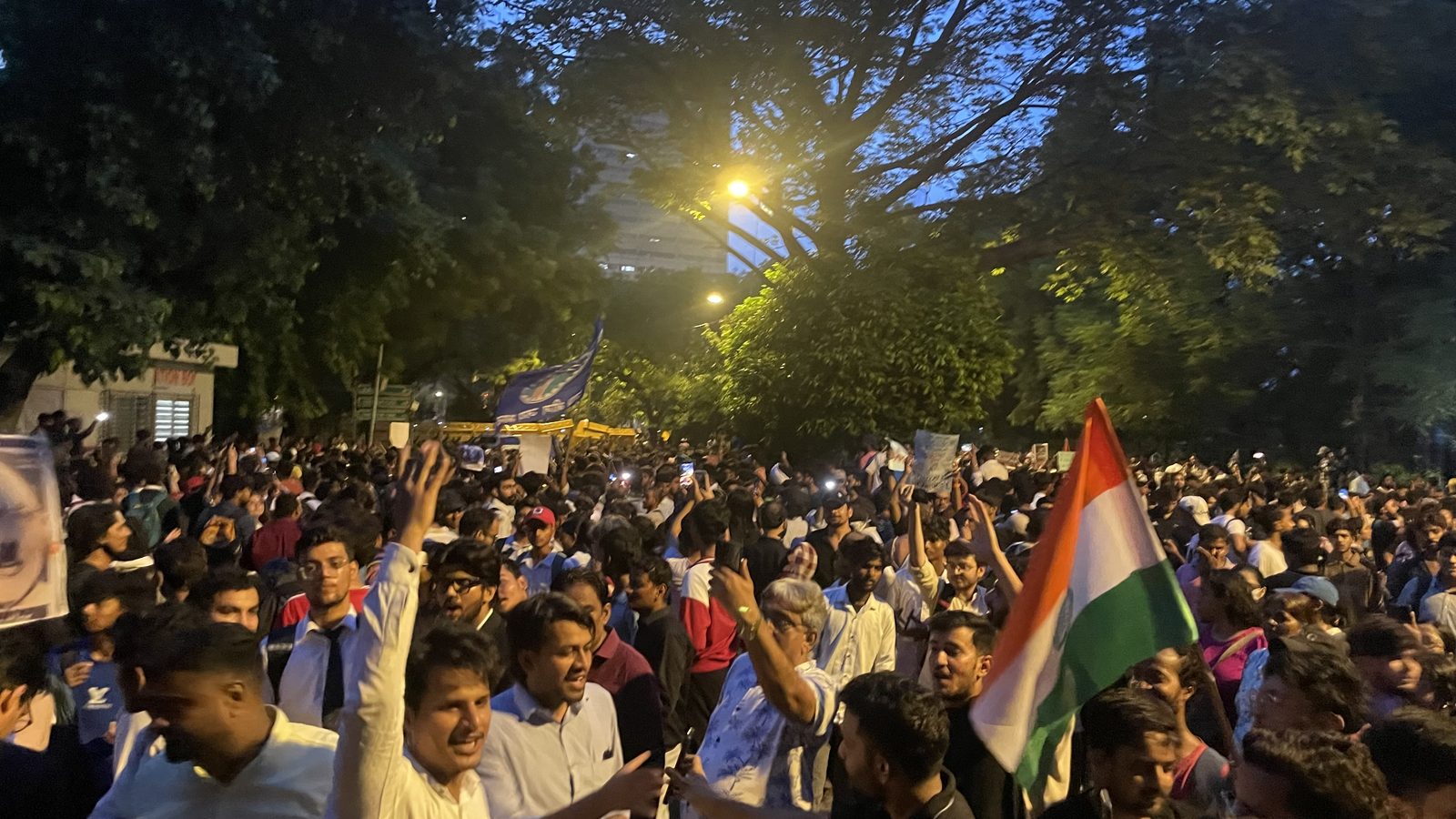
On Gandhi Jayanti, more than 700 citizens were detained in Delhi for asking whose names were cut from the voter list. The state did not debate the voter roll — it deleted the debate. A sharp note on what it means when the referee of democracy answers questions with barricades.
· 2 min read

From the stage to the Commission: TVK drags its Dharapuram grievance to the Election Commission
Escalating the Dharapuram row, TVK minister C.T.R. Nirmal Kumar said the party will complain to the Election Commission about M.K. Stalin's alleged remarks about its candidate P. Sathyabama, as the bypoll campaign enters its final stretch. No transcript exists; the DMK has not responded.
· 2 min read

The roofs above our children, the roadblocks for the chief minister
A state that can summon 2,000 police at a day's notice for a chief minister's roadshow cannot keep a roof bolted down at a school games venue. Thrissur's injured children and Coimbatore's barricaded streets are the same story: power performed instead of power exercised.
· 2 min read