Left stranded by design: Supreme Court to examine how India's aviation boom forgot disabled travellers
The Supreme Court will examine a plea that India's aviation boom has left disabled travellers stranded at every step, from booking and Digi Yatra to boarding and arrival, in a systemic failure to implement accessibility law.
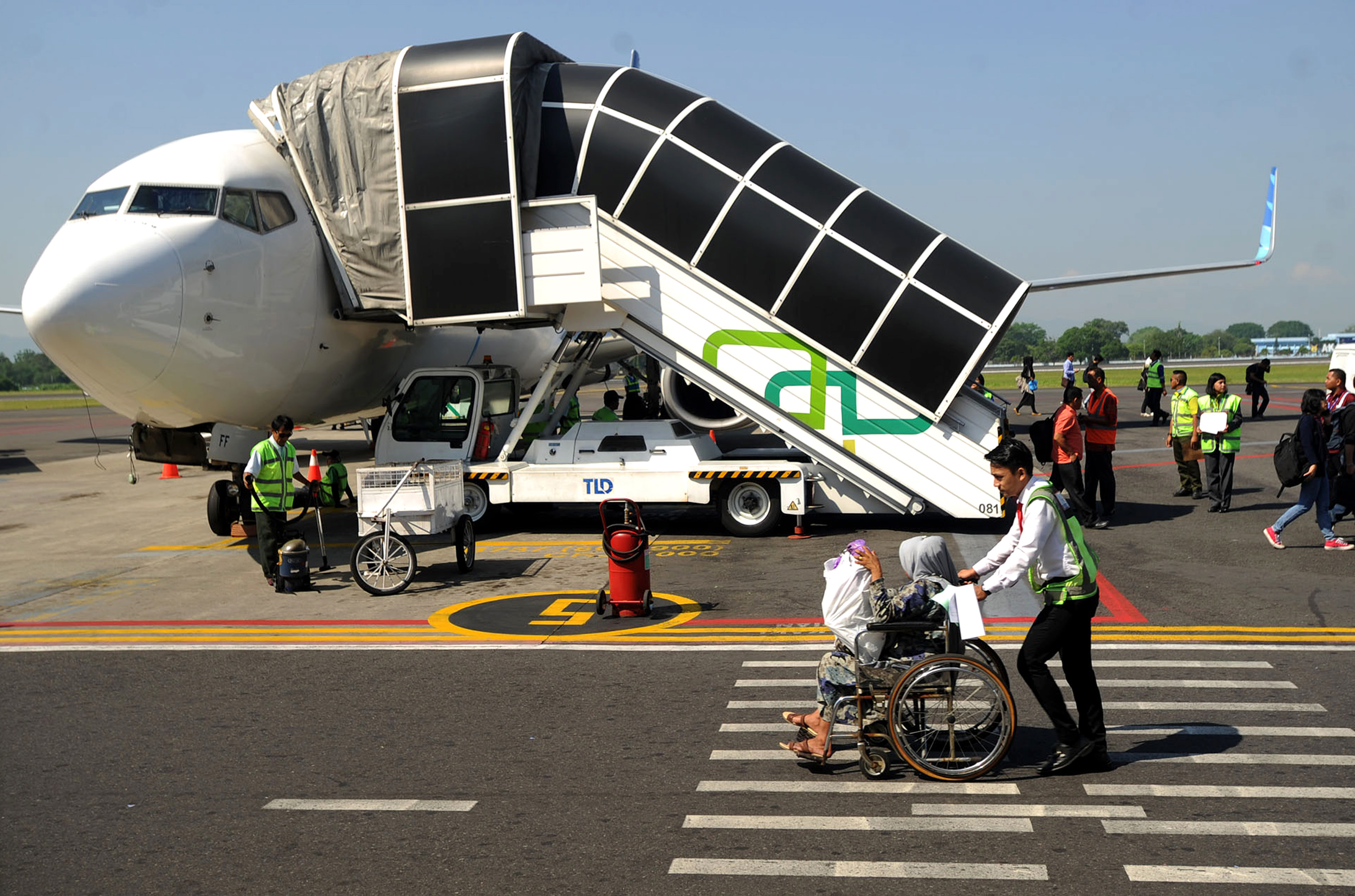
NEW DELHI: India's airports are busier, newer and prouder than ever. For a disabled passenger, the journey can still collapse at the first click. The Supreme Court has agreed to examine a plea that describes a systemic and nationwide failure to implement accessibility across every stage of air travel, including booking, web check-in, airport entry and navigation, counter check-in, security screening, Digi Yatra processing, immigration, boarding, in-flight services and arrival assistance.
The wording matters. This is not a complaint about one rude staffer or one broken lift. The plea says the blind spots are built into the boom itself: systems scaled for speed and volume without the staff, design and accountability that the Rights of Persons with Disabilities Act, 2016 promises. When assistance depends on luck, dignity depends on luck too.
The human cost has already reached the court in individual stories. In a separate case, a woman with 75 per cent disability in her legs told the court she was asked repeatedly to stand during security checks at Kolkata airport and left to wheel herself without help. The court in that matter sought the Centre's response and spoke of the need for a standard operating procedure. The new plea asks why, years after the law, a procedure is still the exception.
The aviation question is part of a wider disability-rights scrutiny. In the Action for Autism public interest case, a Bench of Justice B. V. Nagarathna and Justice R. Mahadevan has sought data from the insurance regulator on how many life-insurance policies insurers have actually issued to persons with autism, cerebral palsy, intellectual and multiple disabilities, and has listed the matter for November 19. Travel, insurance, education and work keep returning to the same gap between statute and service.
The court's examination will not rebuild an airport. It can, however, force the question that expansion plans avoid: who was this system designed for? A boom that strands the very citizens the law names first is not an accessibility lapse at the margins. It is a design choice, and it is now before the country's highest court.
Sources
Share this story
Related articles

Adani cuts a third of Mumbai's international flights, then gets summoned to Delhi
Adani-run Mumbai airport plans to withdraw 265 of 770 weekly international departure slots from October 25, citing Terminal 1 redevelopment. Airlines have rejected the cut, pointing to sold-out winter schedules — and the aviation ministry has been forced to intervene.
· 2 min read

No survivors: Tinubu confirms all 32 dead in Nigerian air force crash, declares three-day national mourning
President Bola Tinubu confirmed all 25 passengers and seven crew aboard the Nigerian Air Force ATR-42 were killed when it crashed near Igbokoda, Ondo State, on Monday, and declared three days of national mourning with flags at half-mast.
· 2 min read

Supreme Court agrees to urgently hear Punjab's plea against CBI probe into CM Mann's office
Punjab will urgently approach the Supreme Court against the High Court order directing the CBI to probe ED allegations that CM Bhagwant Mann's OSD ran a transfer-posting and tender racket, with a report due in two months.
· 2 min read

'Established beyond doubt': Rahul Gandhi accuses CEC of illegally changing Form 6 after court rebuke
Rahul Gandhi said it was 'established beyond doubt' that CEC Gyanesh Kumar changed voter-registration Form 6 illegally and unilaterally, after the Chief Justice of India clarified the Supreme Court never approved any modified form. The poll panel issued a point-by-point rebuttal.
· 2 min read