Opinion
Opinion: An affidavit is not a film certificate
The High Court's question about a Rs 30 crore gap in a Rs 600 crore affidavit is not about arithmetic. It is about whether a leader's word is tested like anyone else's before he rules.

An affidavit is not a film certificate. It is not a poster to be glanced at and forgotten once the show begins. It is the one page where a candidate for power tells the voter, in writing, what he owns, what he owes, and what he has done. That is why Wednesday's hearing in the Madras High Court matters beyond Perambur.
The court asked whether missing about Rs 30 crore inside a declaration of roughly Rs 600 crore could amount to corrupt practice, and whether an accountant's preparation should excuse the candidate. These are fair questions for a judge to test. They are uncomfortable questions for a government that asks to be judged on competence. A first-time government may rely on chartered accountants. It may not rely on them as a shield. When a man signs an affidavit, he does not lend his signature; he gives his word.
The defence says minor errors do not mislead and that no voter has been shown to have changed his mind. That argument confuses the meaning of disclosure. The voter does not check an affidavit to be persuaded like a customer. He checks it to decide whether the man asking for power respects the rules before he holds it. Periyar's self-respect was never the pride of the powerful. It was the insistence that no man's word should be taken on trust because his face is familiar. Anna turned that insistence into a politics of accountability. Kalaignar's writing returned again and again to one test: does the ruler submit to the same scrutiny he demands of others?
By that test, the TVK government should welcome a full hearing, not seek the exit at the threshold. If the omission was a genuine error, a hearing will establish it and the law will do what it does. If the petitioners cannot prove materiality, they will fail on facts, not on a technicality. What the government cannot credibly do is argue both that its leader's declaration was comprehensive and that a Rs 30 crore question does not deserve an answer.
Tamil Nadu has seen celebrity become power before. It has also learned the cost when admiration replaces examination. The court's phrase, that the texture of the case has changed, should be read as a civic instruction. Affidavits are small documents with a large promise: that in a democracy, wealth must explain itself before it rules. The case will be decided by evidence and precedent, as it should be. The principle should not be in doubt at all.
Sources
Share this story
Related articles
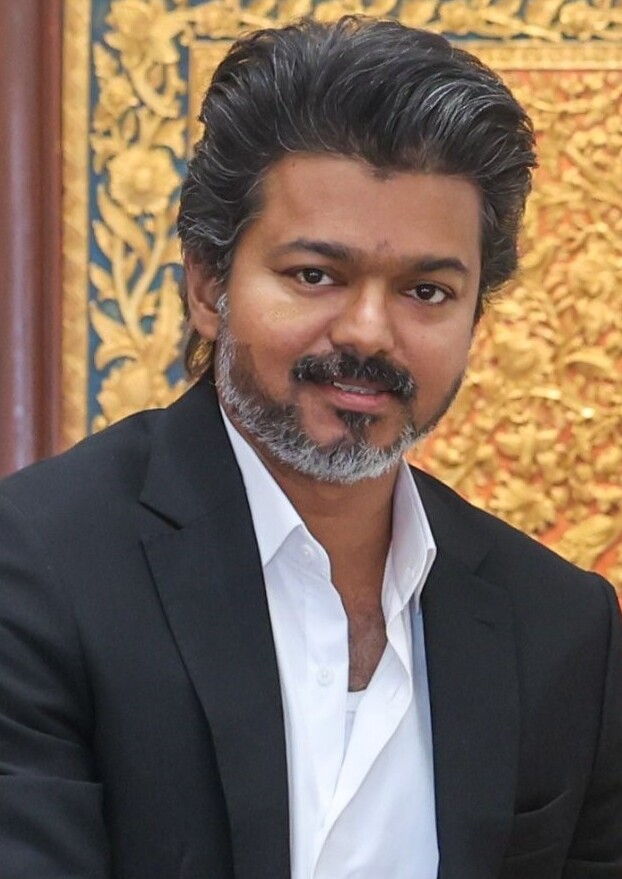
'Texture changed': High Court puts Vijay's Perambur win under a harder lens
Justice V. Lakshminarayanan asked whether leaving about Rs 30 crore out of an affidavit showing roughly Rs 600 crore could count as corrupt practice, as Vijay seeks to have the Perambur election petitions thrown out.
· 2 min read
Opinion: A waiver capped at Rs 75,000 is not a waiver, it is an accounting trick
A full loan waiver was promised to farmers with up to five acres. What arrived was a ceiling, renamed schemes and silence on the Cauvery. Tamil Nadu's farmers deserve delivery, not vocabulary, this Opinion argues.
· 2 min read
Opinion: A scheme is its queue, and 18,500 families are still standing in it
Nearly 20,000 households applied for Tamil Nadu's rooftop solar subsidy; about 1,500 have been cleared. Judged by the standard Periyar, Anna and Kalaignar set — that welfare must reach the last person in the queue — the gap is the story, and it demands a public dashboard.
· 2 min read
'Absolute nothing': DMK says TVK agriculture budget renames schemes and short-changes farmers
The DMK has dismissed the TVK government's first agriculture budget as 'absolute nothing', accusing Chief Minister C. Joseph Vijay of renaming old schemes, capping the promised farm loan waiver, and staying silent on Cauvery.
· 2 min read