Sitharaman: India-US trade talks have hit a plateau — further concessions 'very, very difficult'
Finance Minister Nirmala Sitharaman says India-US trade negotiations have levelled off with little room left for give and take, days after the US trade chief said a deal was 'not imminent'. Small exporters and farmers are left paying the price of a stalemate that has run since February 2025.
By The Justice Bureau
· 2 min read
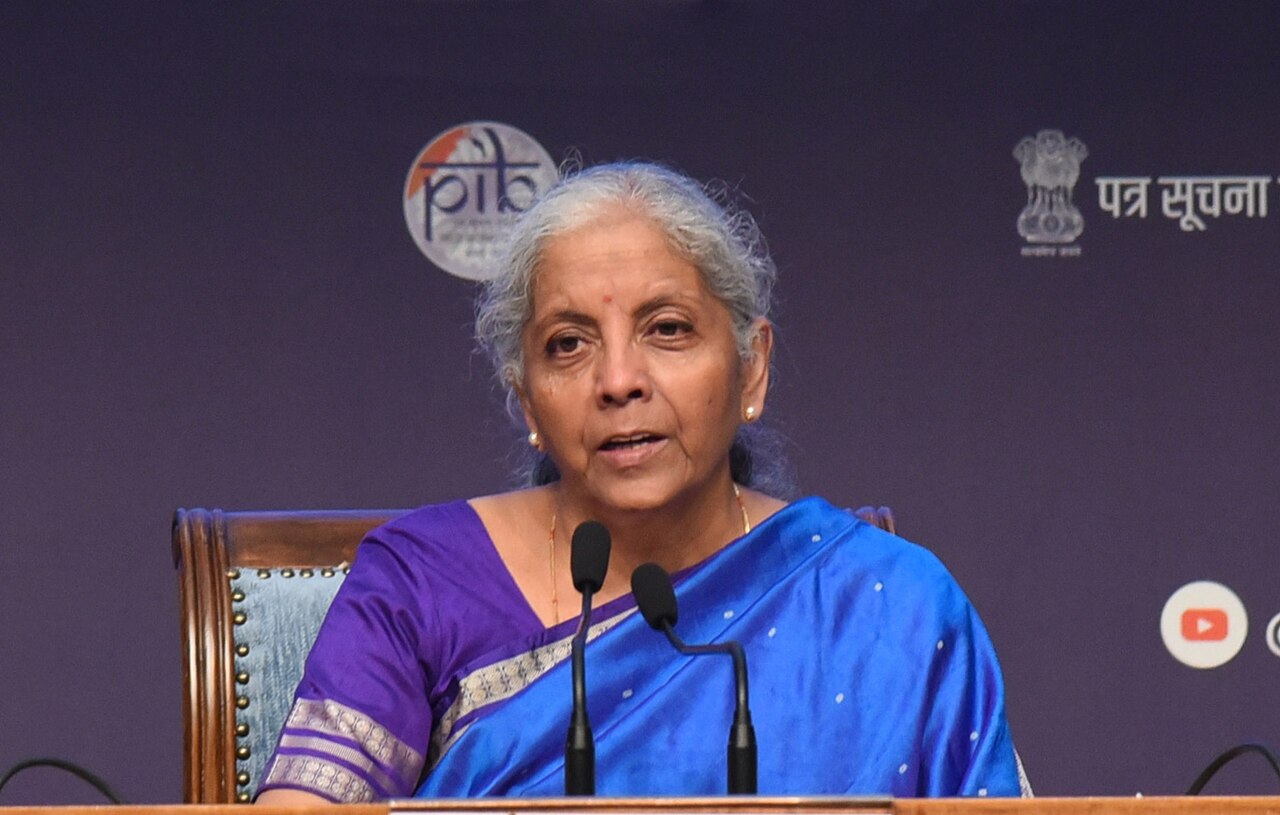
Finance Minister Nirmala Sitharaman, who said the India-US trade talks have hit a plateau. (File photo) Photo: Ministry of Finance of India
NEW DELHI — The India-US trade deal, negotiated for twenty months and announced as imminent more times than anyone can count, has quietly admitted what exporters already knew: it is going nowhere.
Finance Minister Nirmala Sitharaman said on Monday that negotiations on the bilateral trade agreement have reached a "plateau" beyond which further concessions from either side would be "very, very difficult." The talks, she said at the Munich Leaders Meeting in New Delhi, were still being "hard and very rigorously negotiated" — but both governments, in her telling, have levelled off. "Maybe if there are rooms to operate from, both sides would do it," she added.
The admission lands days after US Trade Representative Jamieson Greer told reporters, following his meeting with Commerce Minister Piyush Goyal in Milwaukee, that an agreement was "not imminent." The two countries have been negotiating since February 2025. A framework for an interim deal agreed that month never got signed, after the US Supreme Court struck down the legal footing of the preferential tariff mechanism Washington had offered. Prime Minister Modi spoke to President Trump on September 30; the needle has not moved.
Sitharaman was characteristically blunt about the structural obstacle: the trade balance is "very much in our favour," she said, and Washington naturally wants to narrow what it regards as losses accumulated over the years. She accused the US of "weaponising" tariffs to address its trade imbalance, arguing that such structural issues should be settled through negotiation rather than coercion. On India's continued purchase of Russian crude, she noted there was no European equivalent of the Lindsey Graham bill — the US legislation threatening 100 per cent tariffs on major Russian oil buyers — shaping talks with the EU.
The contrast with the India-EU negotiation is instructive. At the same meeting, Sitharaman said India had opened 92.5 per cent of its tariff lines to the EU, which had opened 99 per cent in value terms — a deal she framed as working "in favour of jobs." The American file, meanwhile, is a study in managed drift.
Who pays for the drift? Not the ministers. Small and mid-sized exporters on both sides, who lack the legal machinery of large corporations to navigate tariff uncertainty, absorb the costs first. Indian farmers and agricultural producers, whose livelihoods depend on export access, have a direct stake in every stalled round. And ordinary consumers pay indirectly, in higher prices and narrower choice on imported goods, for a friction neither capital seems able to resolve.
Sitharaman left the door technically open. But a plateau is a plateau: the remaining differences are no longer technical details to be ironed out by negotiators. They are political and structural — the kind that resist easy compromise. Twenty months in, the world's most talked-about trade deal has become its most reliable non-event.
The RBI has raised the repo rate to 5.5% in its first hike in nearly four years and lifted its FY27 inflation view to 5.2%. Households will pay more on loans before they feel any relief on prices.
The 57th GST Council meets in New Delhi on October 8 after two postponements, with rates expected to stay put and process reforms - registration, returns, refunds and credit - on the table.
New Delhi says about 140 Indians recruited into the Russian army have been discharged, but the whereabouts of 55 others remain unknown. Families are still waiting for names, not assurances.
Farmers in Mysuru have protested Karnataka's Dasara spending while drought cuts crops and incomes, demanding a farm loan waiver, scientific compensation, drinking water and a halt to loan recovery.