'Can't survive on Rs 8,000': Grameen Bank daily wagers take their protest to Jammu
Daily wagers at J&K Grameen Bank protested at the Narwal head office on Oct 5, saying Rs 8,000 a month cannot sustain a family. Staff absorbed after amalgamation allege pay was cut from Rs 14,000, and demand wages under the Minimum Wages Act.
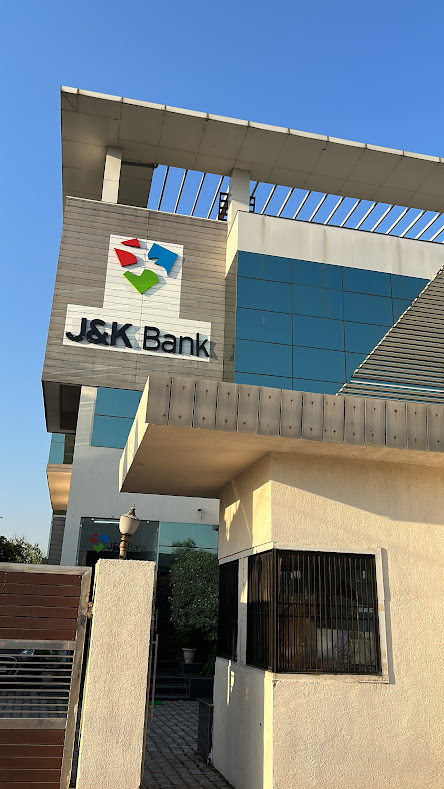
On October 5, daily wage workers of Jammu and Kashmir Grameen Bank gathered outside the bank's head office at Narwal in Jammu with a simple, devastating arithmetic: Rs 8,000 a month. That is what many of them say they are paid to run the everyday work of a rural bank — opening accounts, handling cash, serving farmers and pensioners in branches where permanent staff are thin on the ground.
The protest, organised by the J&K Grameen Daily Wagers Union, called a two-day strike and demanded that wages be fixed under the Minimum Wages Act. Workers said the issue sharpened after amalgamation, when staff who had come in through the former Ellaquai Dehati Bank (EDB) found their monthly pay reduced from around Rs 14,000 to Rs 8,000. A cut of nearly half, they argued, was imposed on the very people least able to absorb it.
"Can't survive on Rs 8,000" was the slogan captured on camera in Jammu this week, and it is hard to argue with the maths. Rent, school fees, transport, medicine and food in Jammu in 2026 do not fit inside that number. Daily wagers also pointed out that they perform regular banking duties without the security, leave or social protection that comes with regularisation. When a bank depends on you every working day for years, calling you "daily" is an accounting device, not a description of the work.
The protest sits inside a wider unrest among daily wagers across Jammu and Kashmir. Deputy Chief Minister Surinder Choudhary has said a committee is examining regularisation and assured workers that all daily wagers will be regularised within the government's term. Those assurances stretch back months. For Grameen Bank workers, the demand is narrower and more urgent: pay the legal minimum now, restore what amalgamation took away, and publish a timeline for absorbing long-serving staff.
Rural banks were created to bring credit closer to farmers, self-help groups and small traders. That mission depends on trust at the counter. A teller who is worried about feeding his own family cannot be the public face of financial inclusion. Whether the bank's management and the administration in Srinagar respond with a wage revision or another committee will decide if this protest was a two-day stoppage or the start of a longer confrontation in Jammu's banking sector.
Sources
Share this story
Related articles
INDIA bloc still waiting for President's appointment as ECI concerns deepen
The opposition says it trimmed its proposed delegation from 15 to 10 members yet still awaits an appointment, while CPI(M) MP John Brittas has received a response to his petition on the SIR controversy.
· 2 min read
140 home, 55 still unaccounted: India presses Moscow over nationals in the Russian army
New Delhi says about 140 Indians recruited into the Russian army have been discharged, but the whereabouts of 55 others remain unknown. Families are still waiting for names, not assurances.
· 2 min read
Festival lights in Mysuru, dry fields outside: farmers demand relief, not pageantry
Farmers in Mysuru have protested Karnataka's Dasara spending while drought cuts crops and incomes, demanding a farm loan waiver, scientific compensation, drinking water and a halt to loan recovery.
· 2 min read
'Development cannot cost farmers their land': Tikait warns Bihar over satellite township push
Farmer leader Rakesh Tikait has warned Bihar that development which costs farmers their land, livelihood and social security cannot be accepted, as coordinated protests build against twelve planned satellite townships.
· 2 min read