Metro Phase II opens October 11 with old fares: Poonamallee to Vadapalani for ₹40, and a ₹50 cap across the network
The first Phase II stretch will run non-stop from Porur to Vadapalani while six stations are still being built. Separately, the State is preparing to hand the MRTS to Chennai Metro Rail by December.
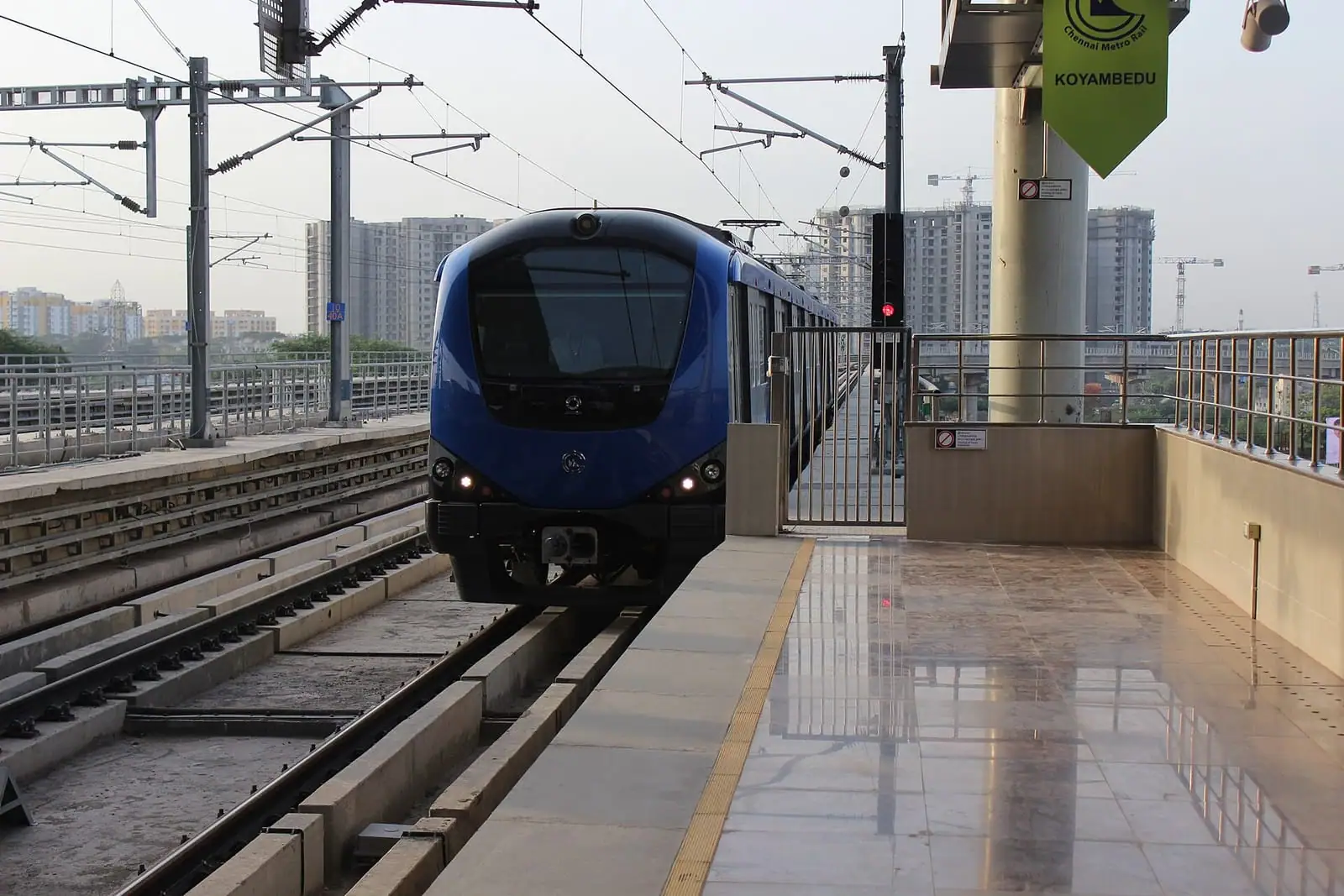
Chennai Metro Rail will not raise ticket prices when its Phase II network begins carrying passengers, Chennai Metro Rail Limited (CMRL) has said. A ride from Poonamallee to Vadapalani will cost ₹40, and no journey across the combined Phase I and Phase II network will cost more than ₹50.
The first Phase II stretch, from Poonamallee to Vadapalani via Porur, is due to be inaugurated on October 11 after months of delay.
What commuters will pay
According to CMRL, the fare from Poonamallee to Porur, or from Porur to Vadapalani, will be ₹30. The full trip from Poonamallee to Vadapalani will be ₹40.
Passengers who change between the two networks and travel further will pay a maximum of ₹50. That cap covers trips from Poonamallee to the far north of the city, including Wimco Nagar, Tiruvottiyur, Kaladipet and Washermanpet, as well as journeys south to Chennai Airport.
The usual 20% discount will apply to all tickets except paper QR tickets bought at station counters. In practice, that means commuters who use cards or app-based QR tickets will pay less than the headline fare.
A line that skips six stations, for now
The opening stretch is 14.6 km long. Trains will stop at all ten stations between Poonamallee and Porur. After Porur, however, the next stop will be Vadapalani.
Six stations in between, at Alapakkam, Karambakkam, Valasaravakkam, Alwarthirunagar, Saligramam Warehouse and Saligramam, are behind schedule and may take a few more months to complete. Until they open, residents of those neighbourhoods will watch trains pass without stopping.
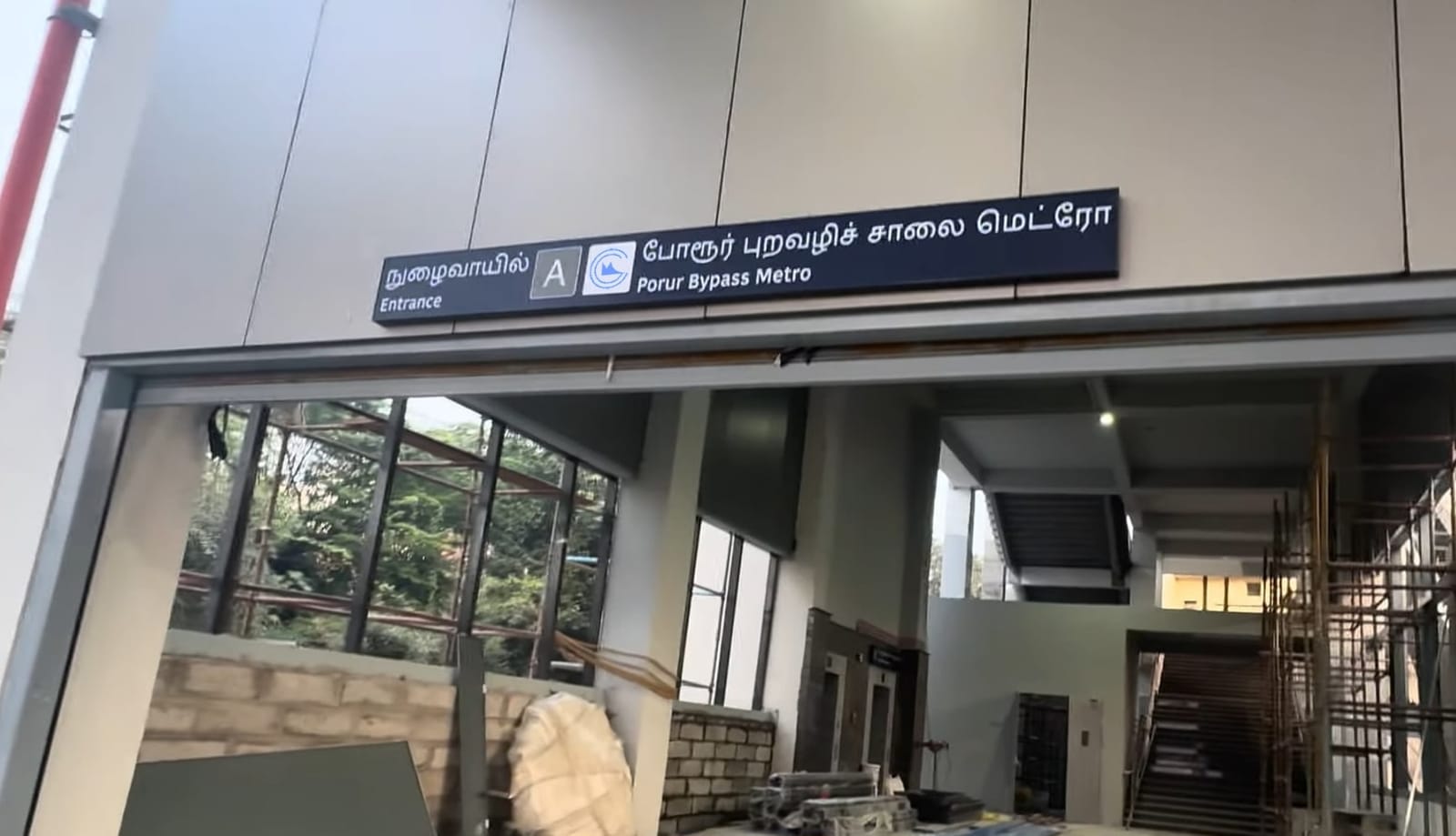
For people west of the city, the opening is still a real change. R.K. Ravichandran, a resident of Iyyapanthangal, told The Hindu that trips to Vadapalani and Koyambedu would become much easier. He also asked CMRL to finish the remaining stations as quickly as possible.
The MRTS changes hands
On a separate track, the State government plans to start transferring the Mass Rapid Transit System (MRTS), the elevated suburban line run by Southern Railway, to Chennai Metro Rail within three months.
The process has several steps. First, the government will issue an order and sign a Memorandum of Understanding (MoU) with Southern Railway. A second order will then direct CMRL to take over the MRTS stations and upgrade them. Officials expect these steps to be completed by December.
The main obstacle is money. Before the MoU can be signed, the two sides must agree a severance package: how much the State will pay Southern Railway for land and other assets. Talks on the final figure are continuing.
The Railway Board gave in-principle approval for the takeover only in July last year, and approved the MoU in August this year. Once the MoU is signed, CMRL must take over the MRTS within 90 days and will have two years to complete the transition, after which it will assume full charge.
The State has also asked the Union Ministry of Housing and Urban Affairs to treat an "MRTS Rejuvenation" project, estimated at nearly ₹6,600 crore, as a Central sector scheme, and plans to seek loans to revamp the stations.
The bigger picture
Holding fares steady matters in a city where the cost of a daily commute weighs heavily on household budgets. But affordable tickets help only those who can reach a working station. The test of Phase II will be how quickly the skipped stations open, and whether the MRTS, long neglected, becomes part of a single, usable network rather than a separate line under a new owner.
Sources
Share this story
Related articles
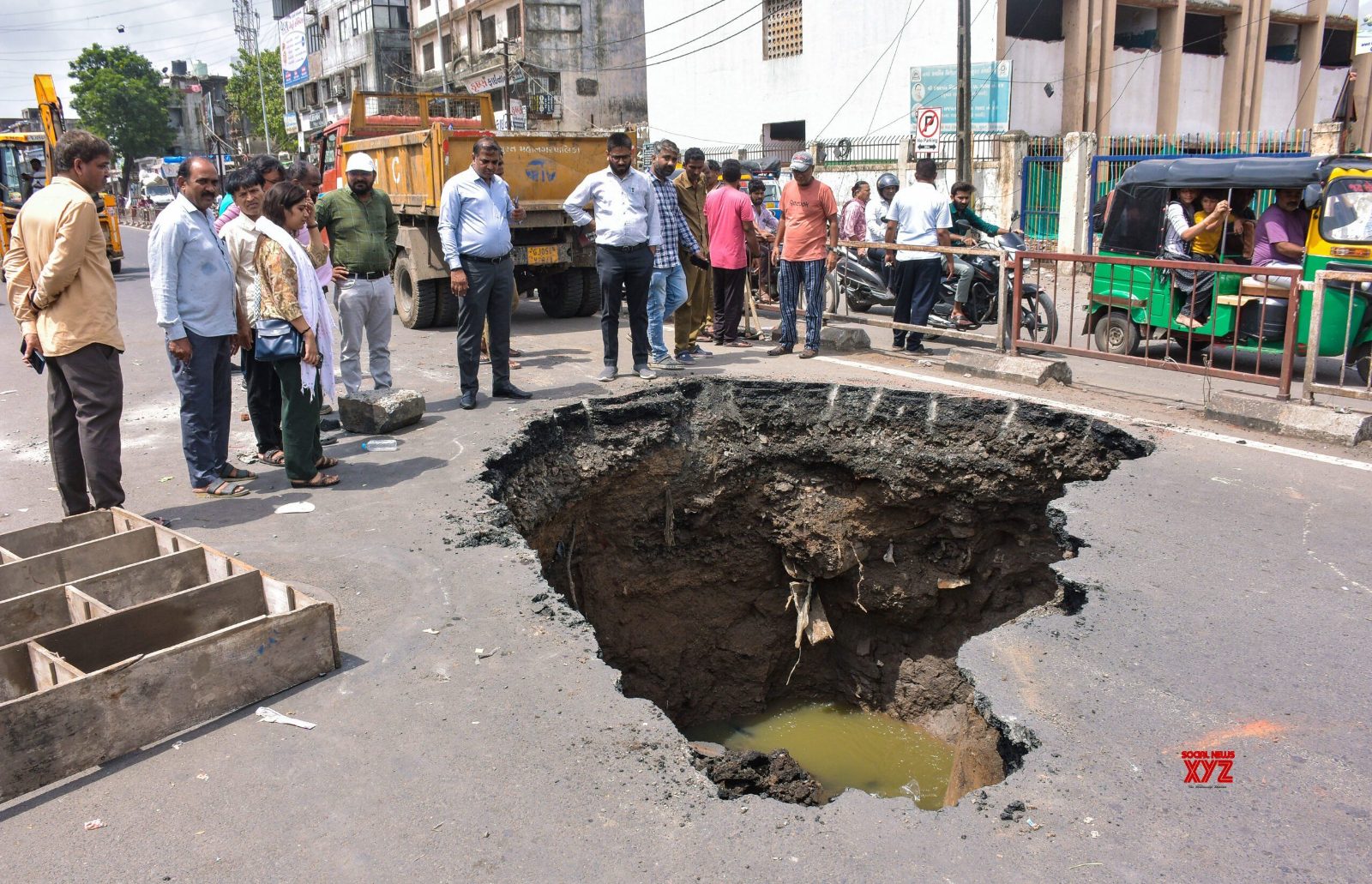
Another 20-foot crater: Perambur Barracks Road cave-in puts TVK government's civic record on trial
A 20-foot-deep crater opened on Perambur Barracks Road on September 30, damaging a sewer line — the second collapse on the road in weeks. As north Chennai's 50-year-old sewer network gives way, the cave-in sharpens questions about the TVK government's delivery on its infrastructure promises.
· 1 min read
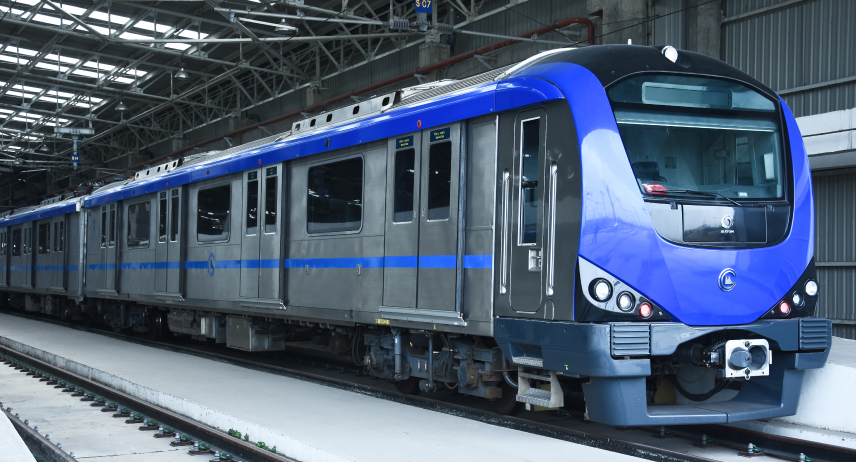
A crore on the metro, a crater on Barracks Road: Chennai's two-speed infrastructure is a political choice
In September, Chennai Metro carried over a crore of passengers for the third straight month. In the same city, Perambur Barracks Road caved in twice in weeks, opening a 20-foot crater. One city, two infrastructures — and the gap between them is where a government's priorities are judged.
· 2 min read
Heavy rain till October 3: IMD sounds yellow alert across Tamil Nadu, Chennai braces for more
The India Meteorological Department has sounded a yellow alert across Tamil Nadu, warning of heavy rain with thunder, lightning and 50 km/h gusts in the Nilgiris, Coimbatore and Erode till October 3; Chennai is already seeing waterlogging and traffic snarls.
· 1 min read
No bail for Veeramani's alleged aides: Chennai POCSO court cites pending forensics, flight risk
Chennai's Special POCSO Court has rejected the bail pleas of Shanti, 60, and her husband Mahendra Simhan, 63, arrested alongside Gem Granites proprietor R. Veeramani in the alleged child-abuse case. The court cited pending forensic examination of seized devices, flight risk and the risk of witness intimidation.
· 2 min read